improving city waste services
pj Overview
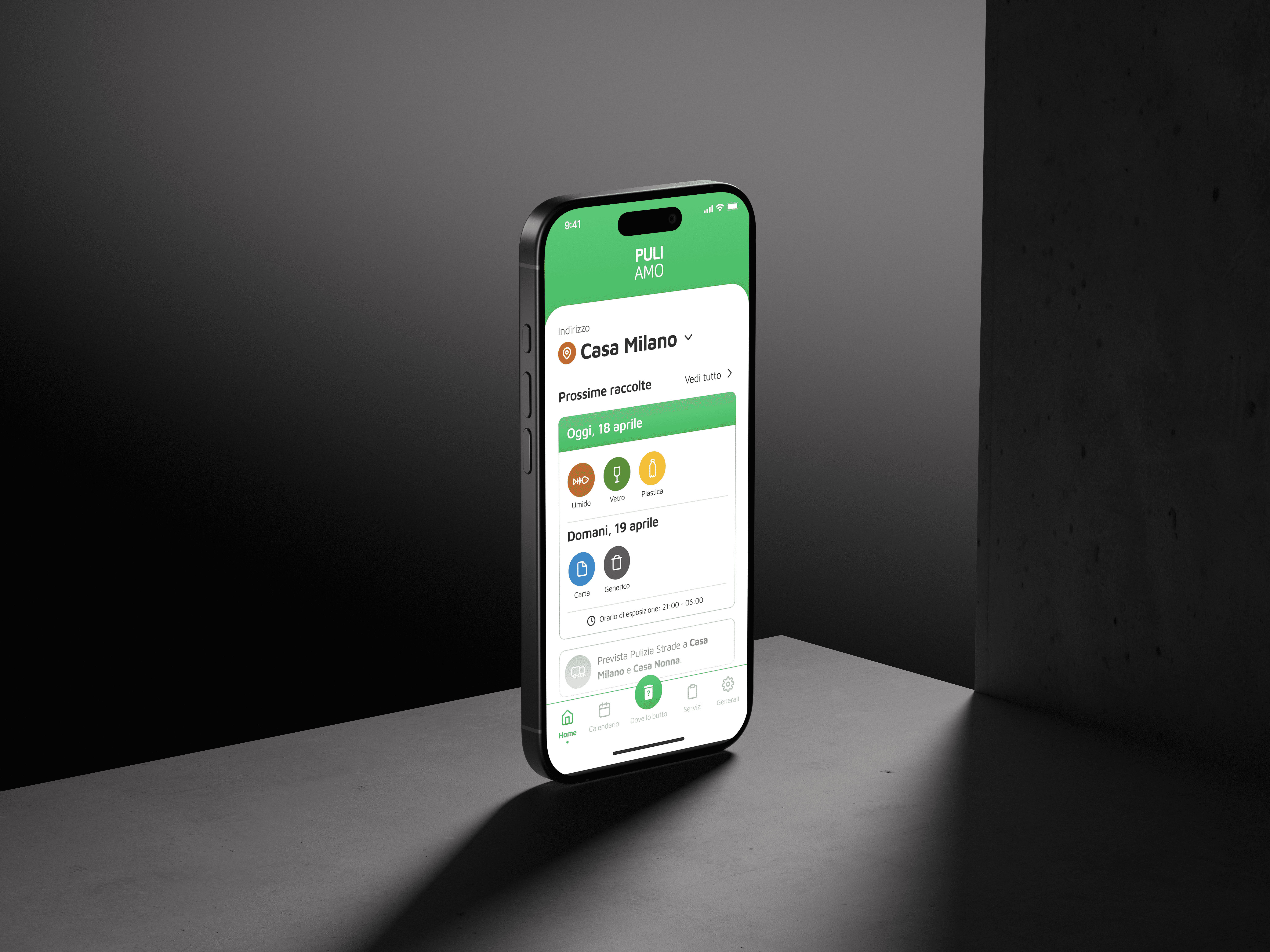
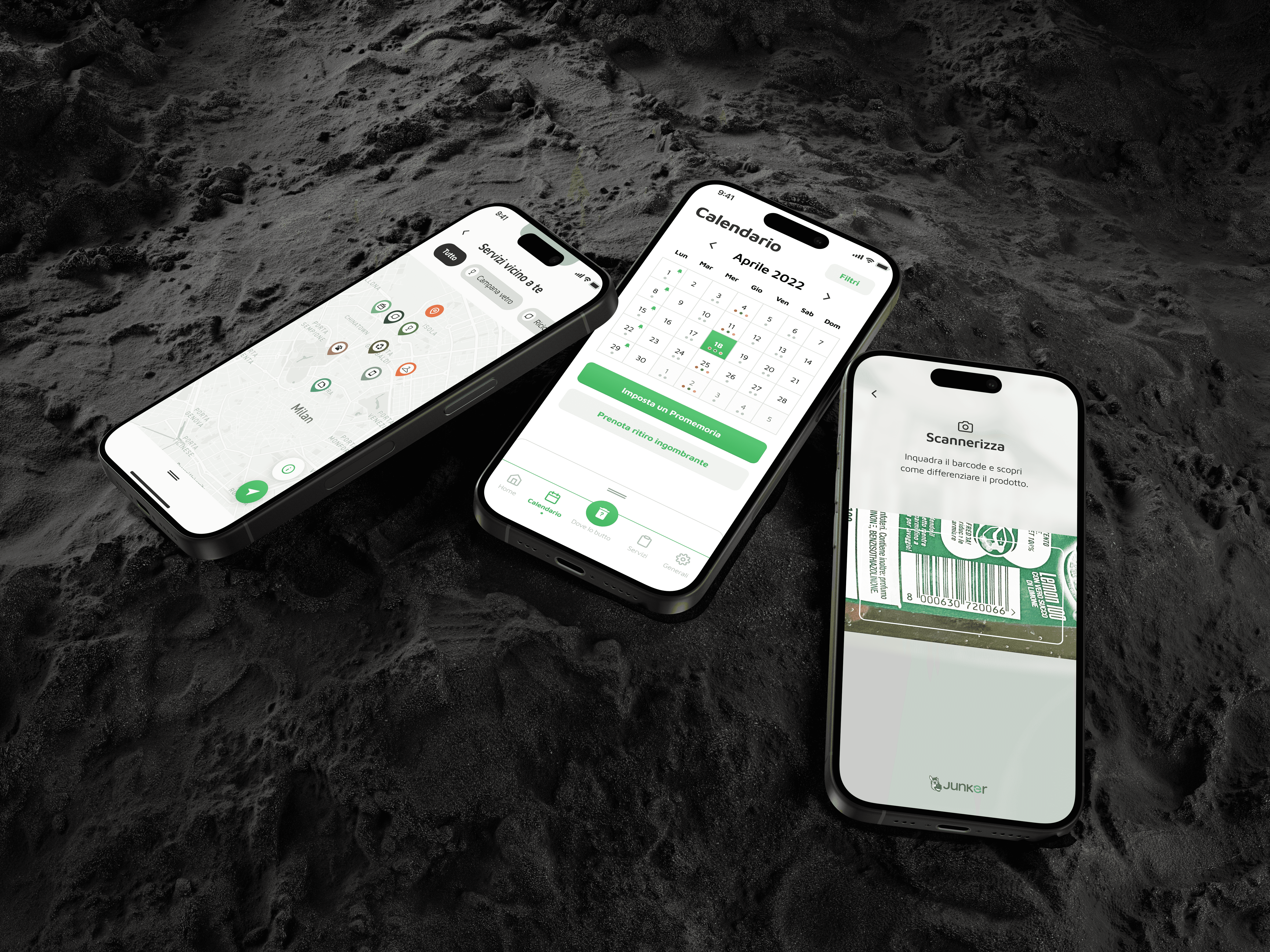
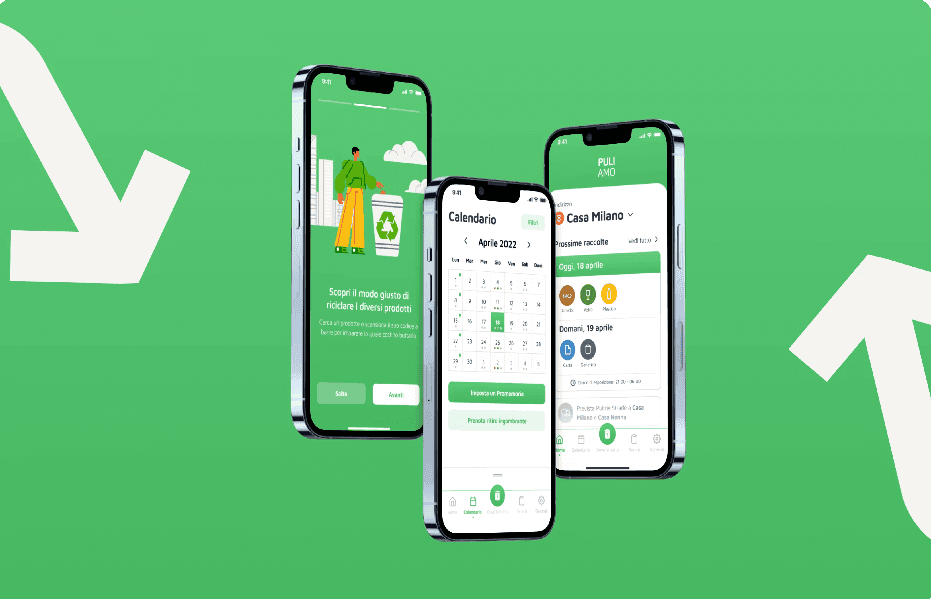
PULIAMO is an application designed to provide a direct contact with the services offered by the milanese urban hygiene company Amsa.
The challenge lies in the current application used by citizens to handle waste. The city app has several criticalities in terms of usability, compromising its use.
The team conducted a multi-phase study to obtain a full understanding of user behaviours, experiences and preferences in relation to the system, proposing a redesign of the service.
all-around UX analysis
The aim of the analysis is two folded: on one hand, it verifies the presence of frictions in the interaction between users and the software, while on the other hand it gives structured advice on how to improve those issues. The ambition is to smooth out the interaction between humans and digital services; this is crucial in a time in which, in response to the COVID-19 pandemic, the need of fully digital public services has rose dramatically - shaping a new reality for organizations operating in the public sector and drastically accelerating their technological development.
This has opened valuable opportunities for public services to make digital platforms part of their core and tailor them to serve citizens through a more personalised and differentiated approach.
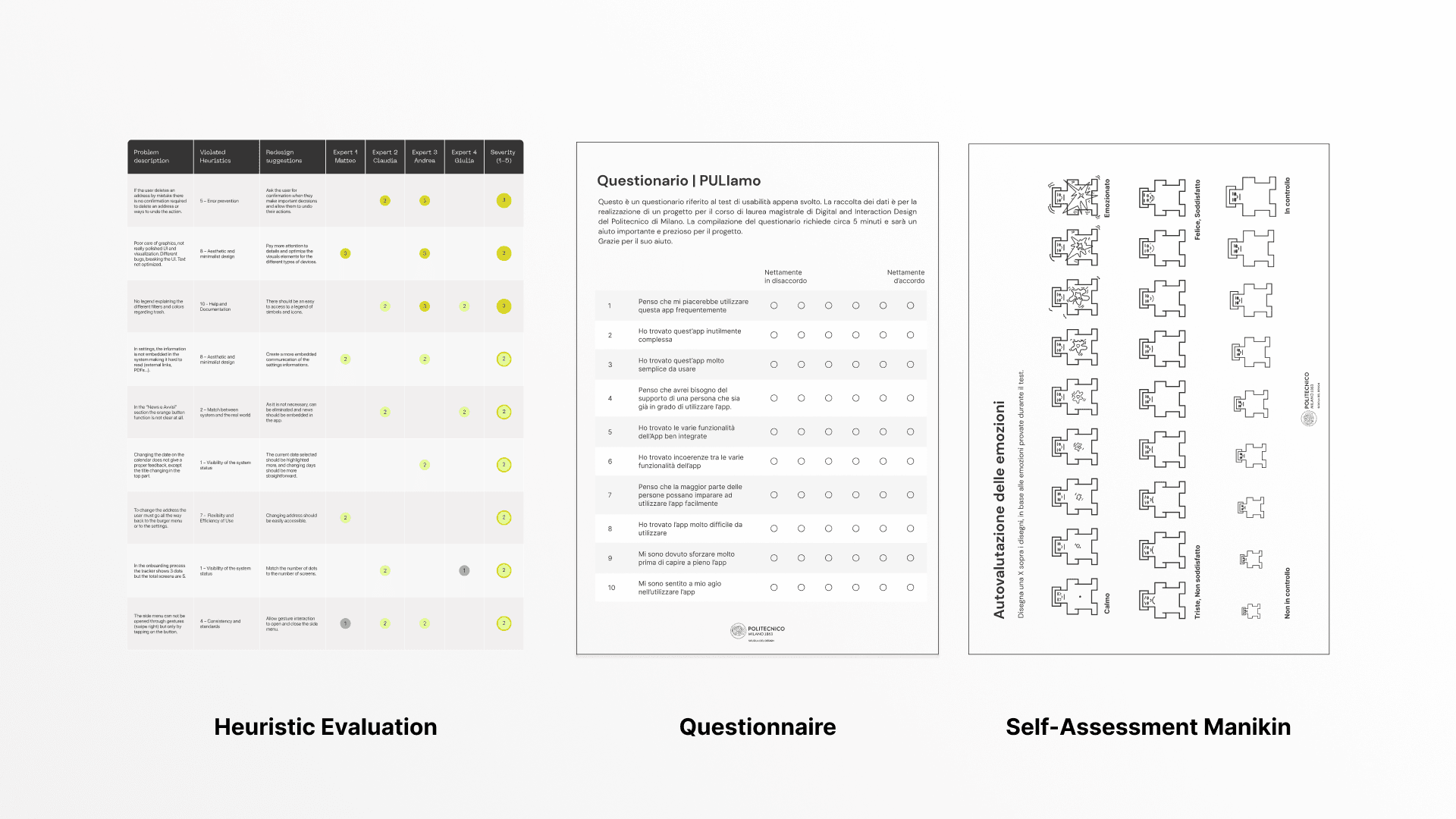
Thanks to tools such as desk research, digital ethnography, heuristic evaluation and user testing, the team was able to gain a deeper understanding of the service, that allowed them to successfully suggest a redesign.
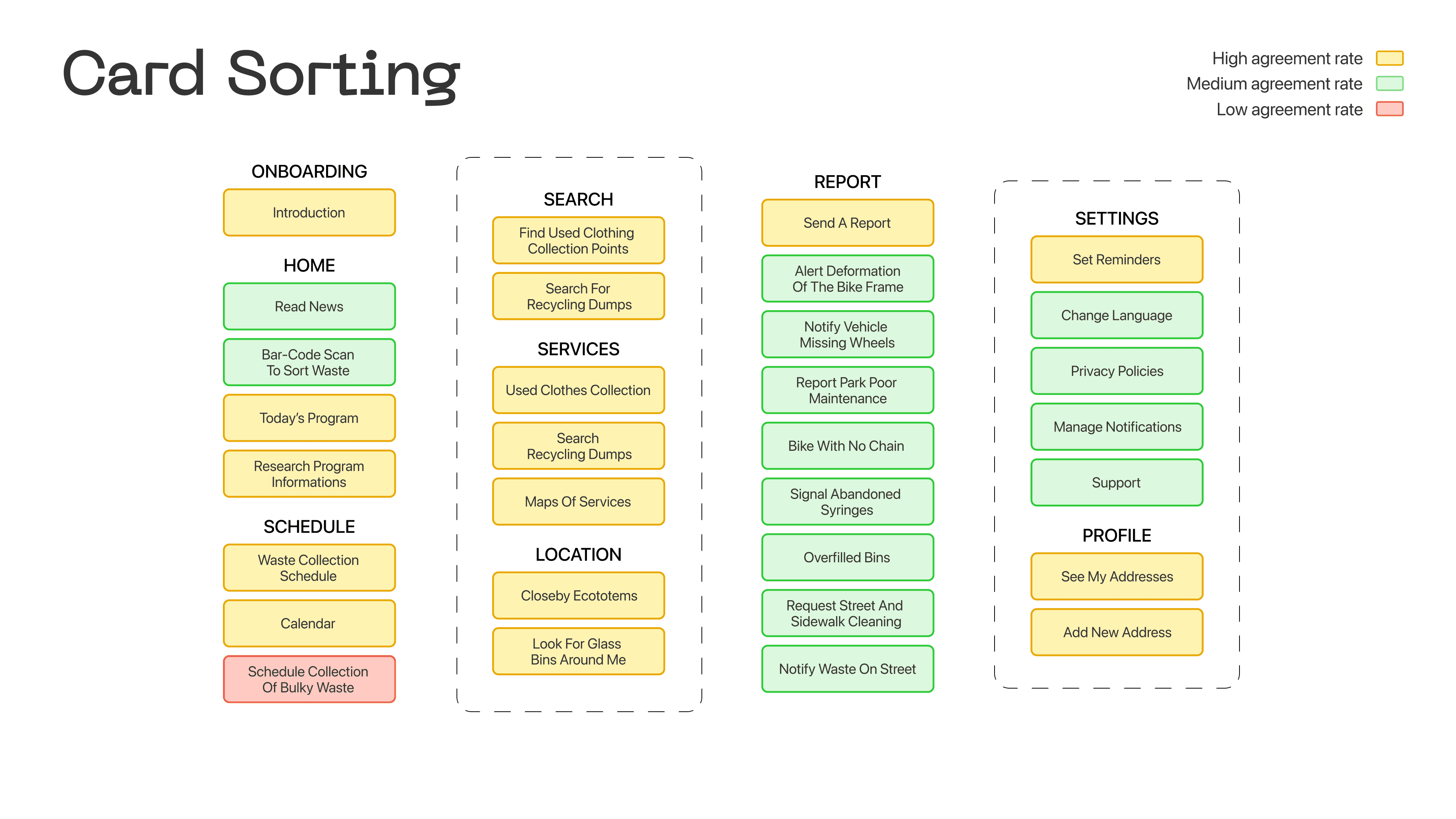
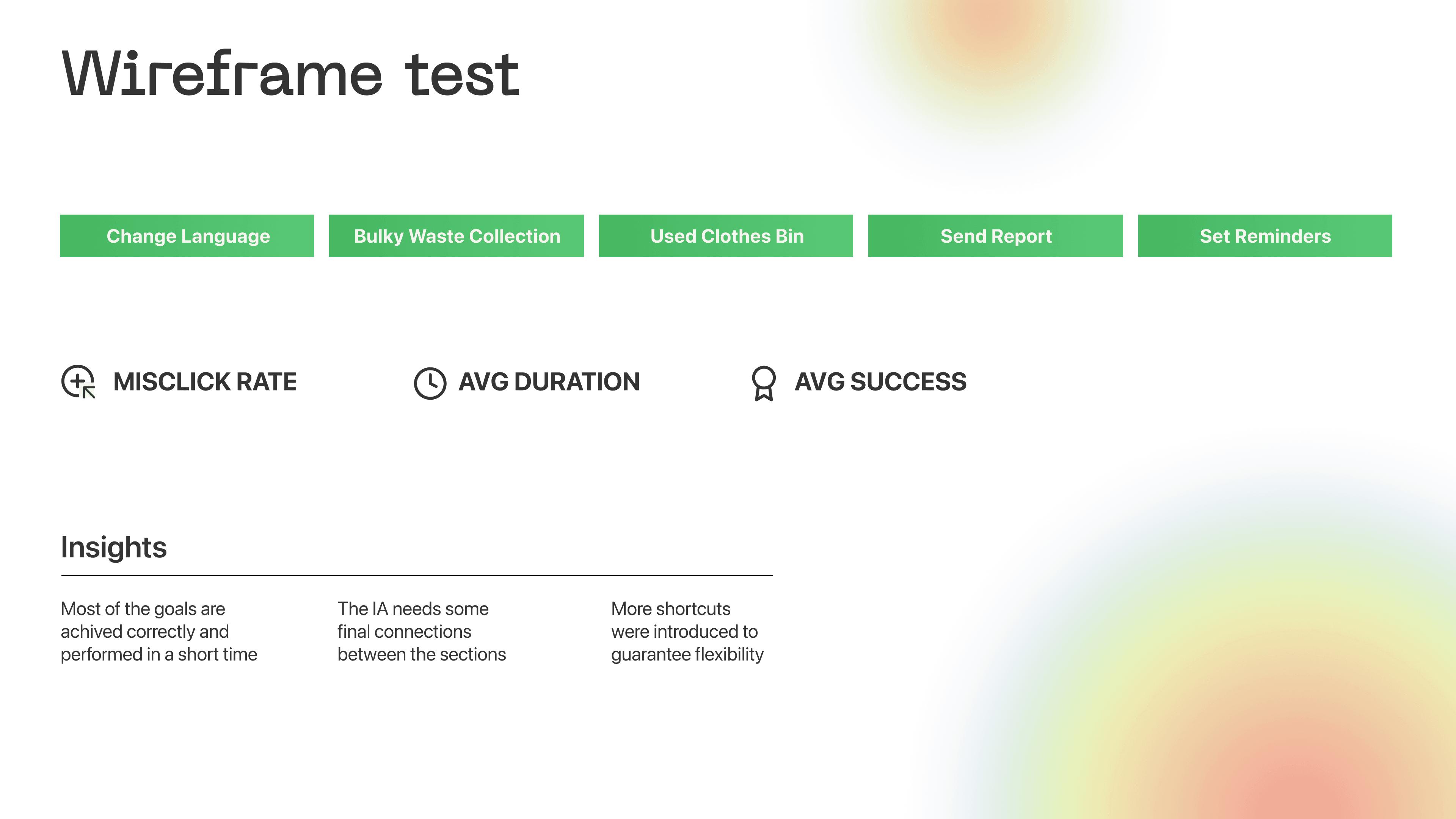
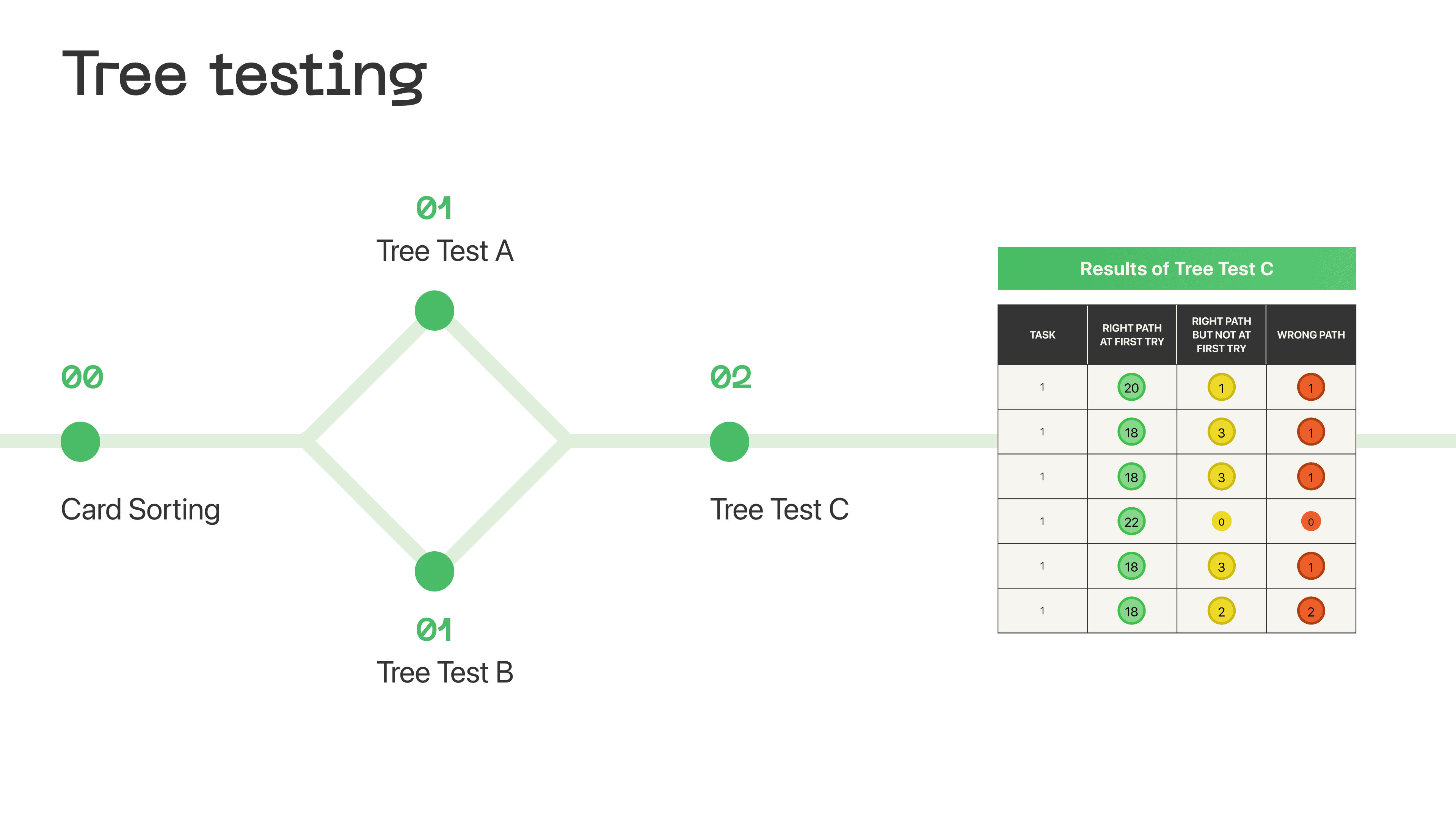
usability tests + RESULTS
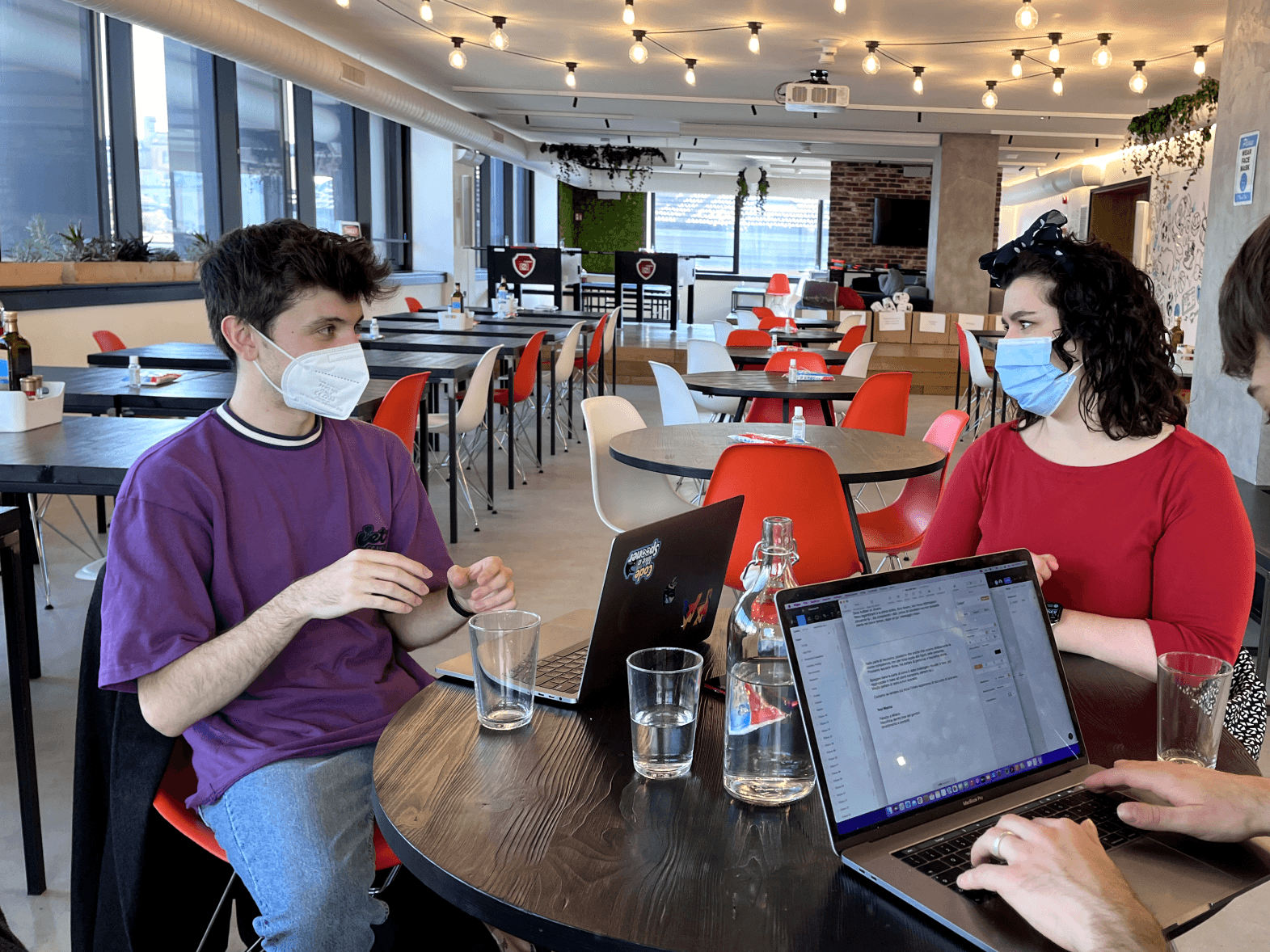
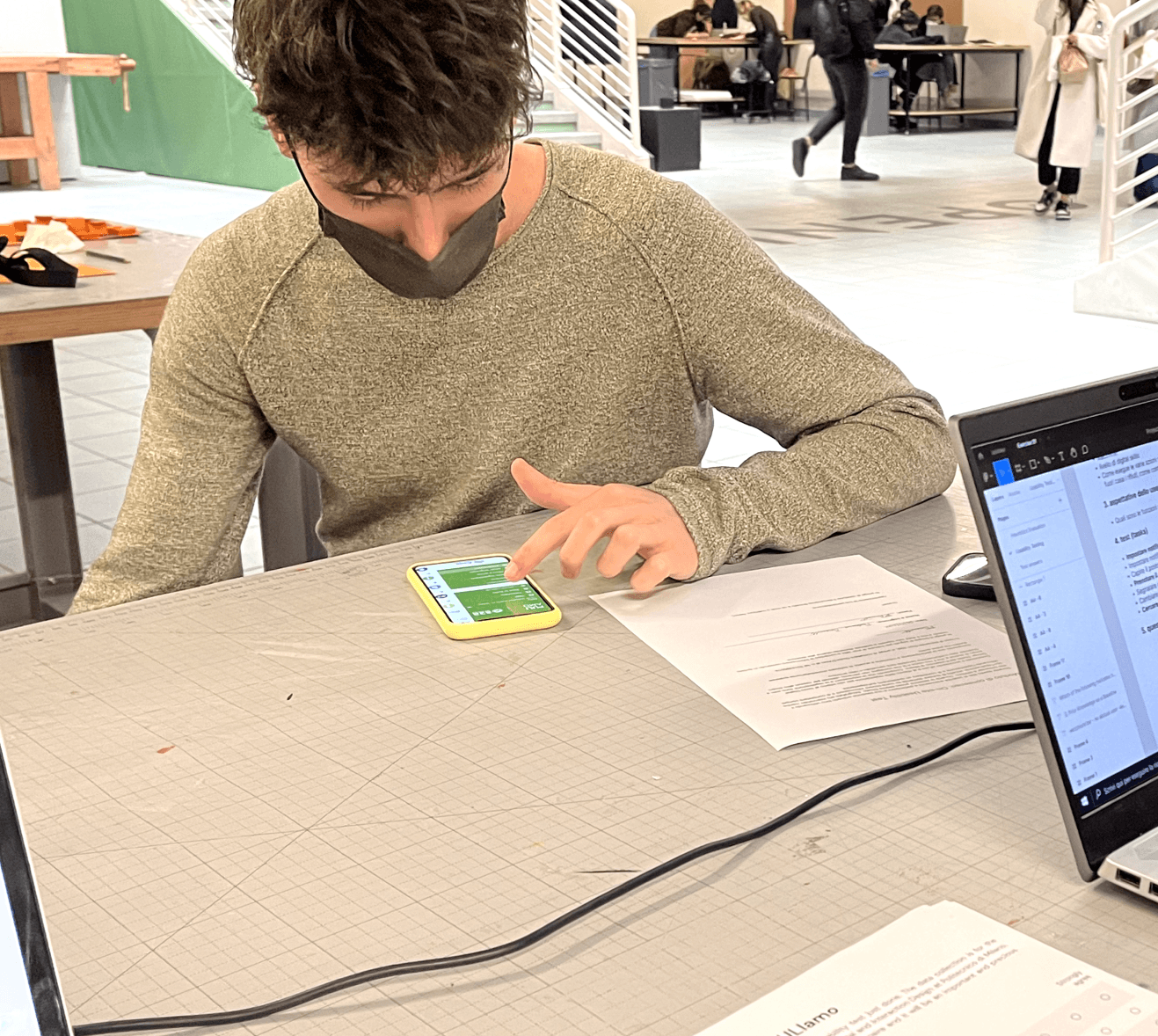
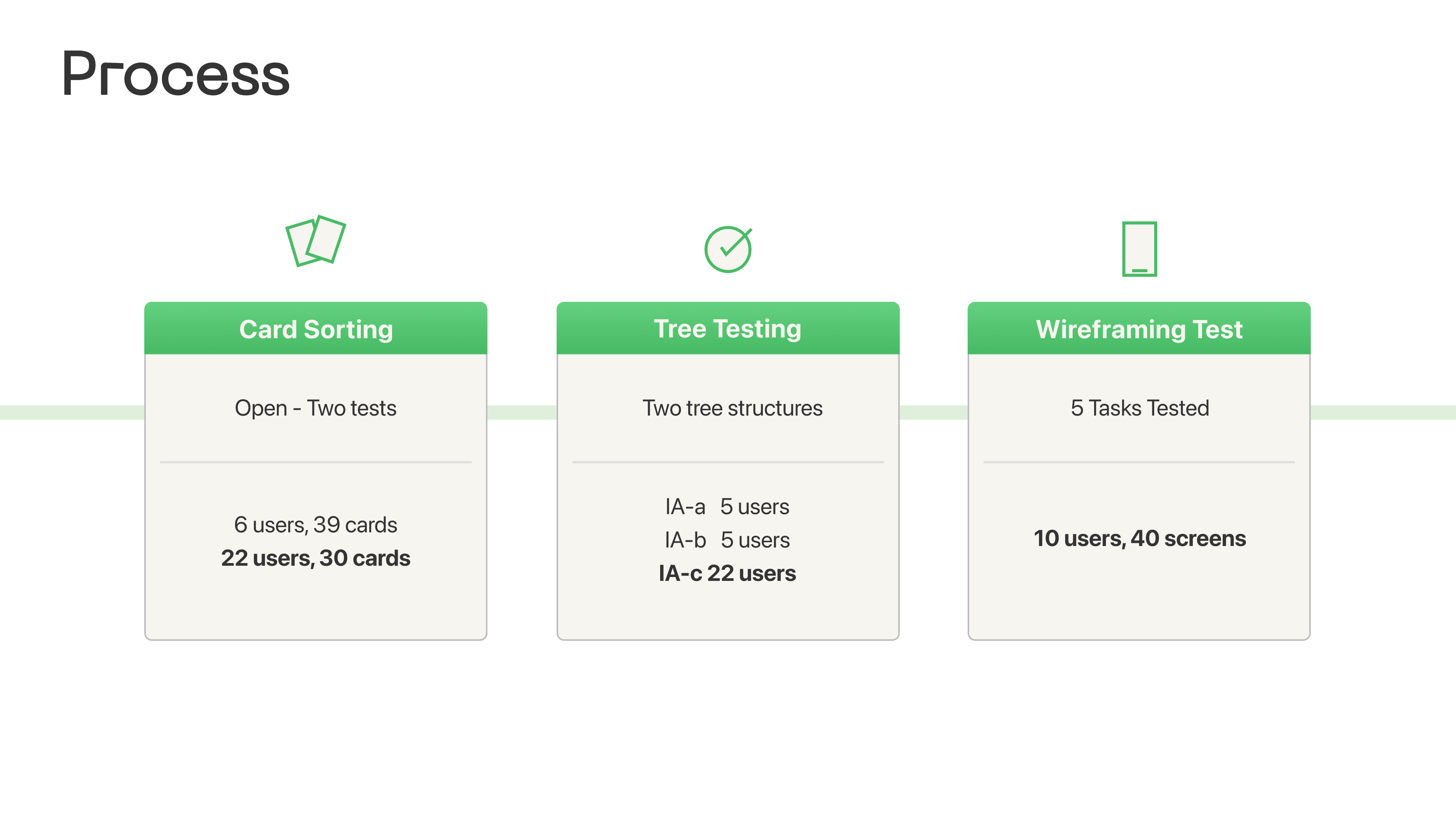
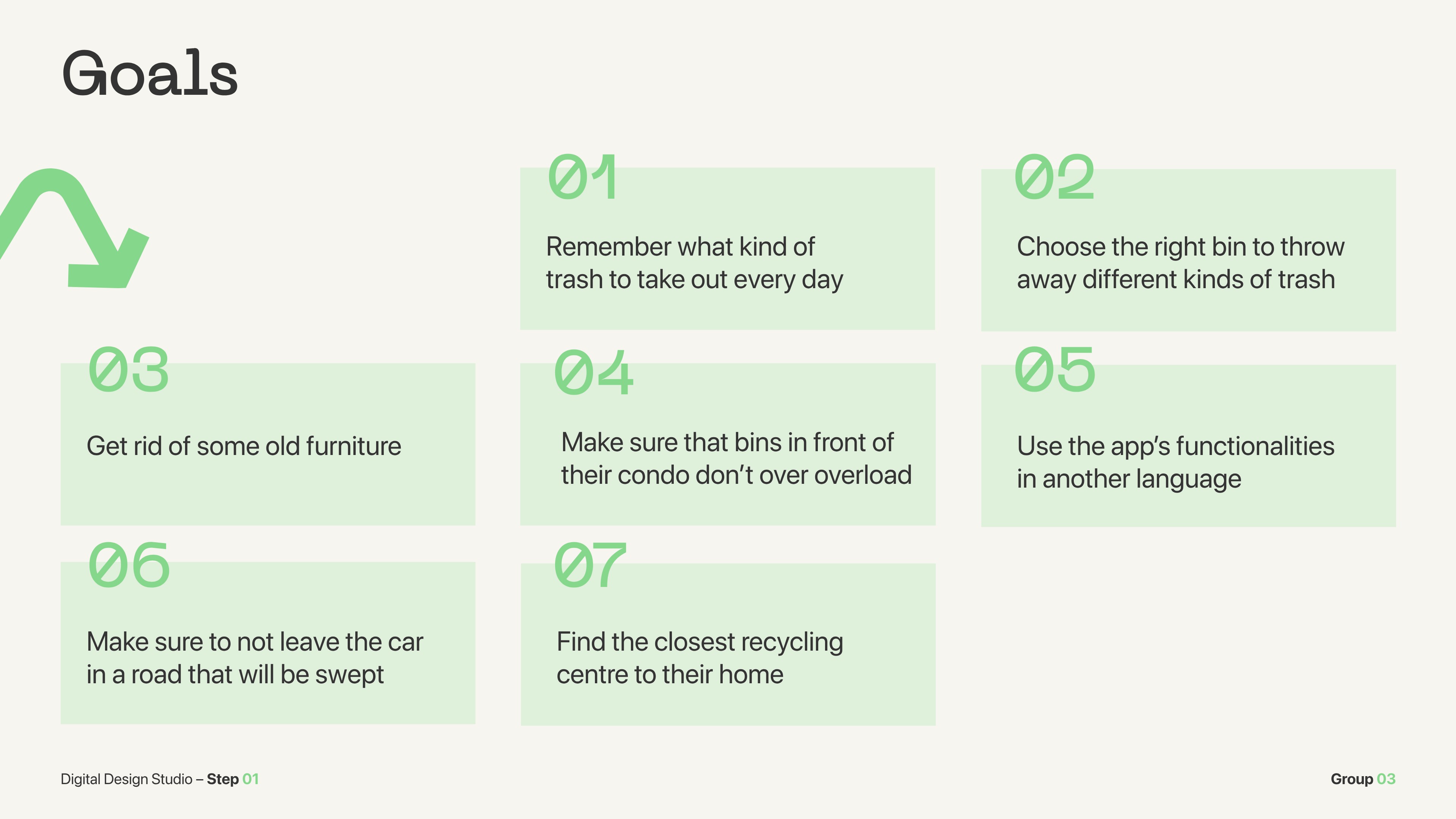
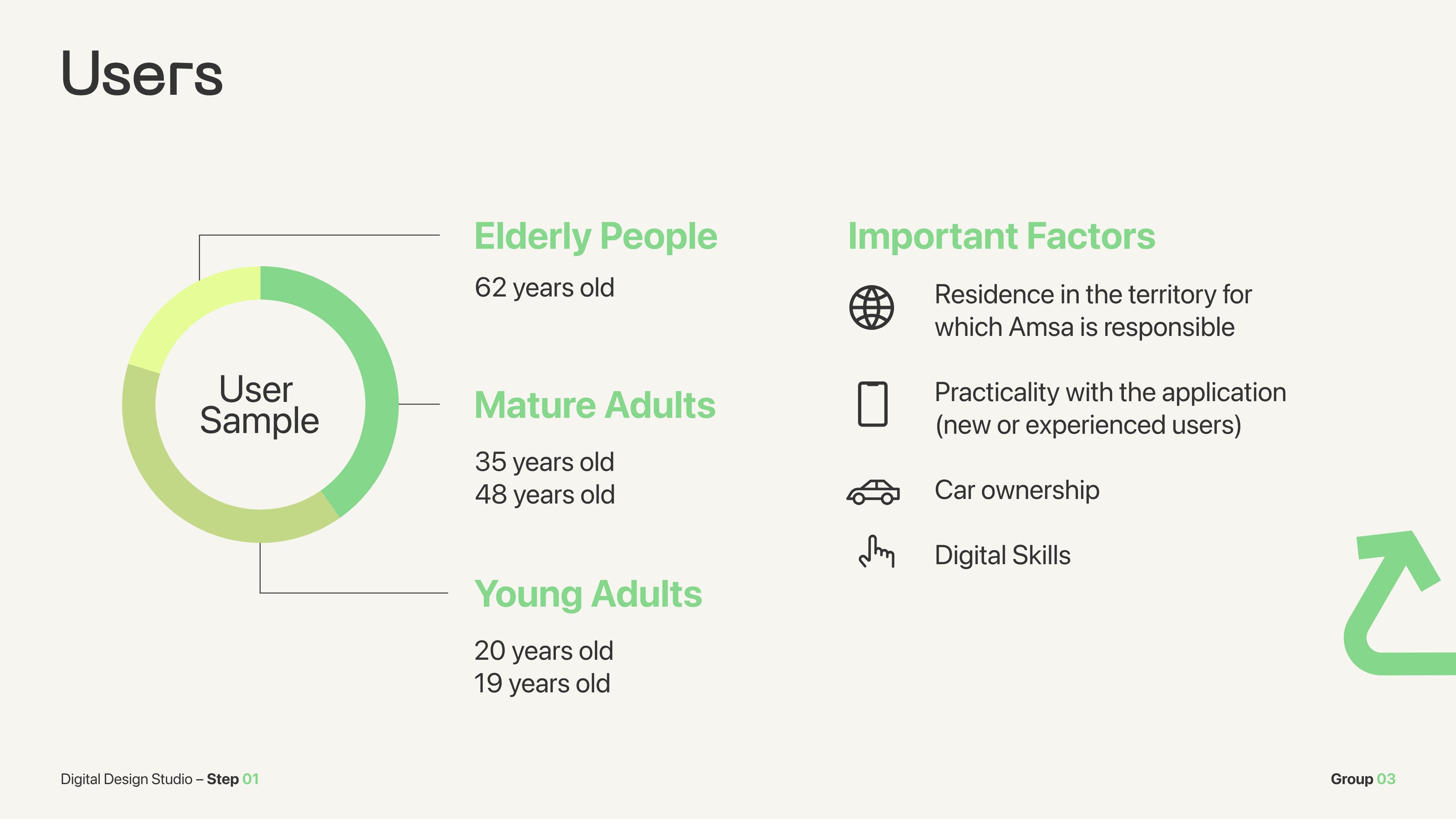
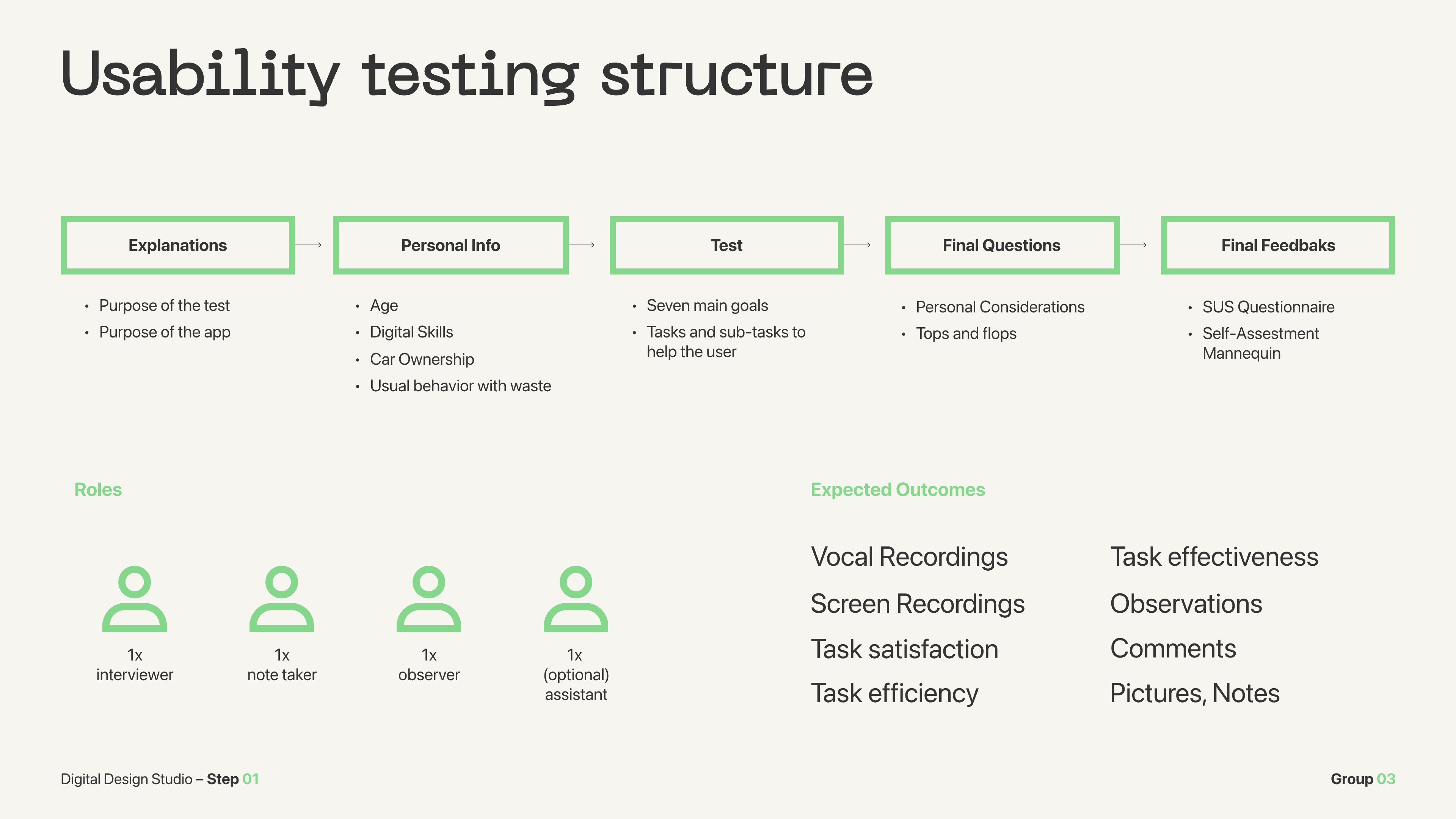
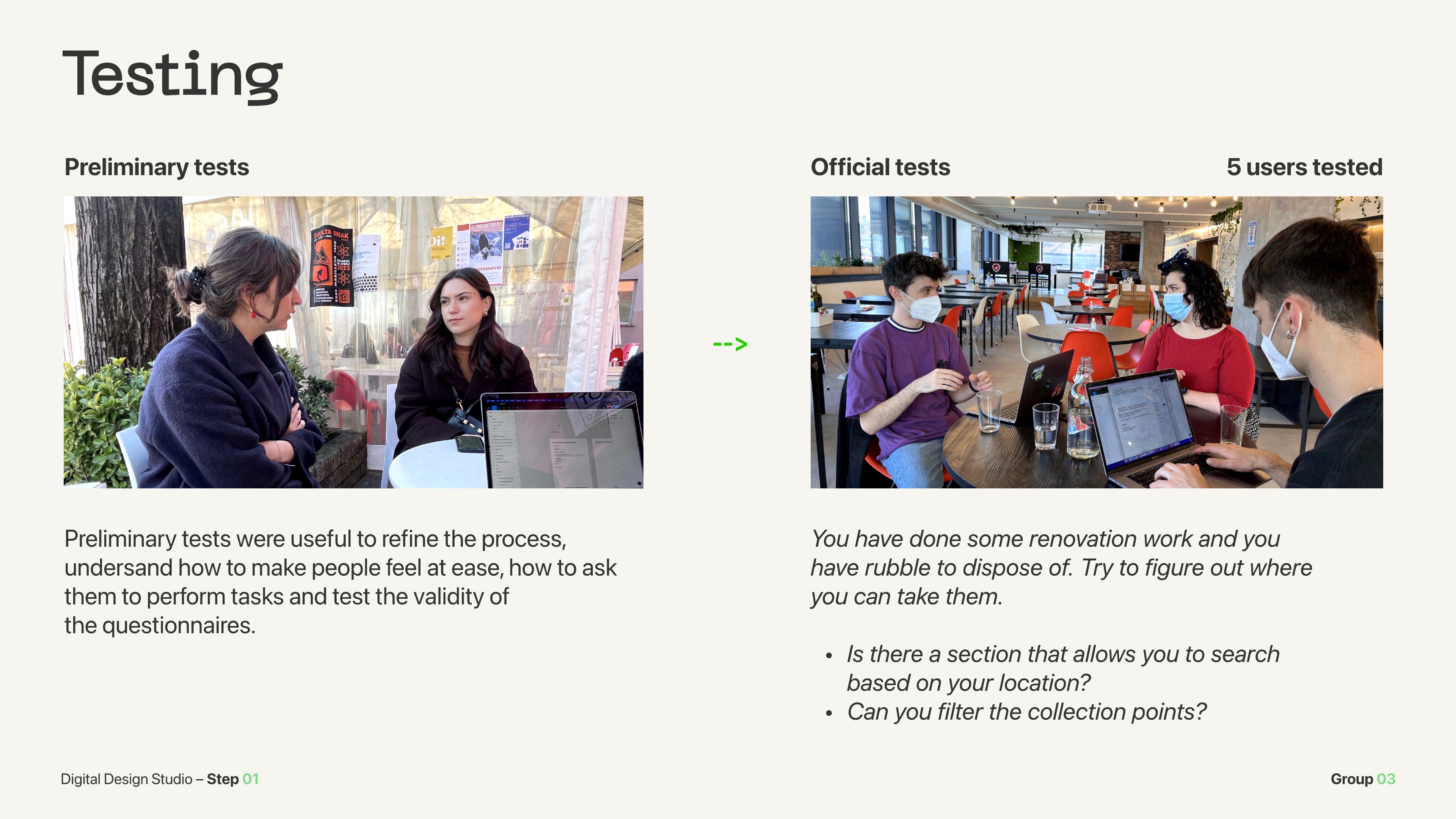
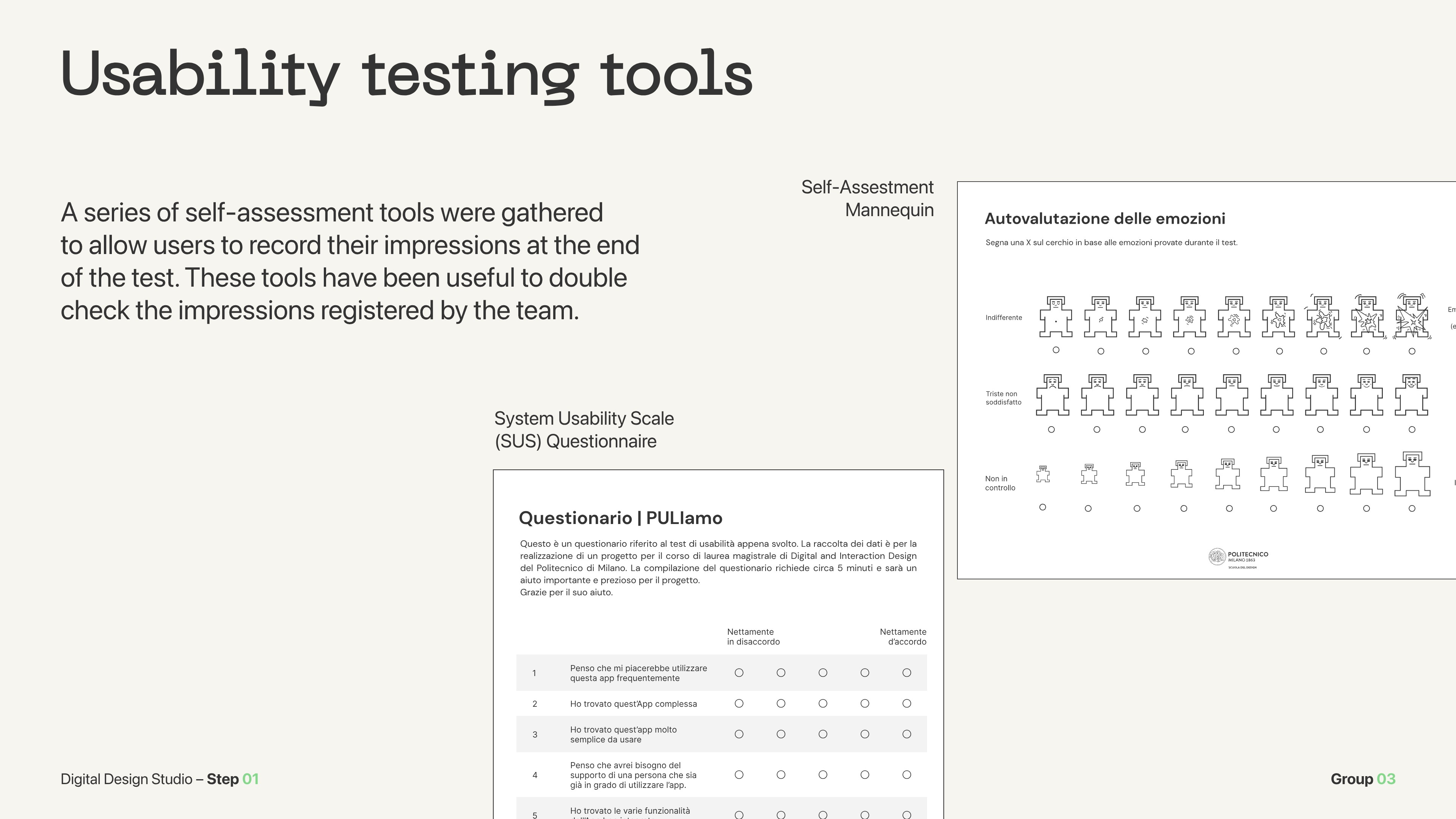
The team developed a schedule of what were intended outcomes and the necessary assets and users needed to accomplish the usability test. Once the list of tasks was defined and the final evaluation questionnaires were settled (SUS,SAM) we proceeded to define which were the participants that could have brought significant insights to the study.
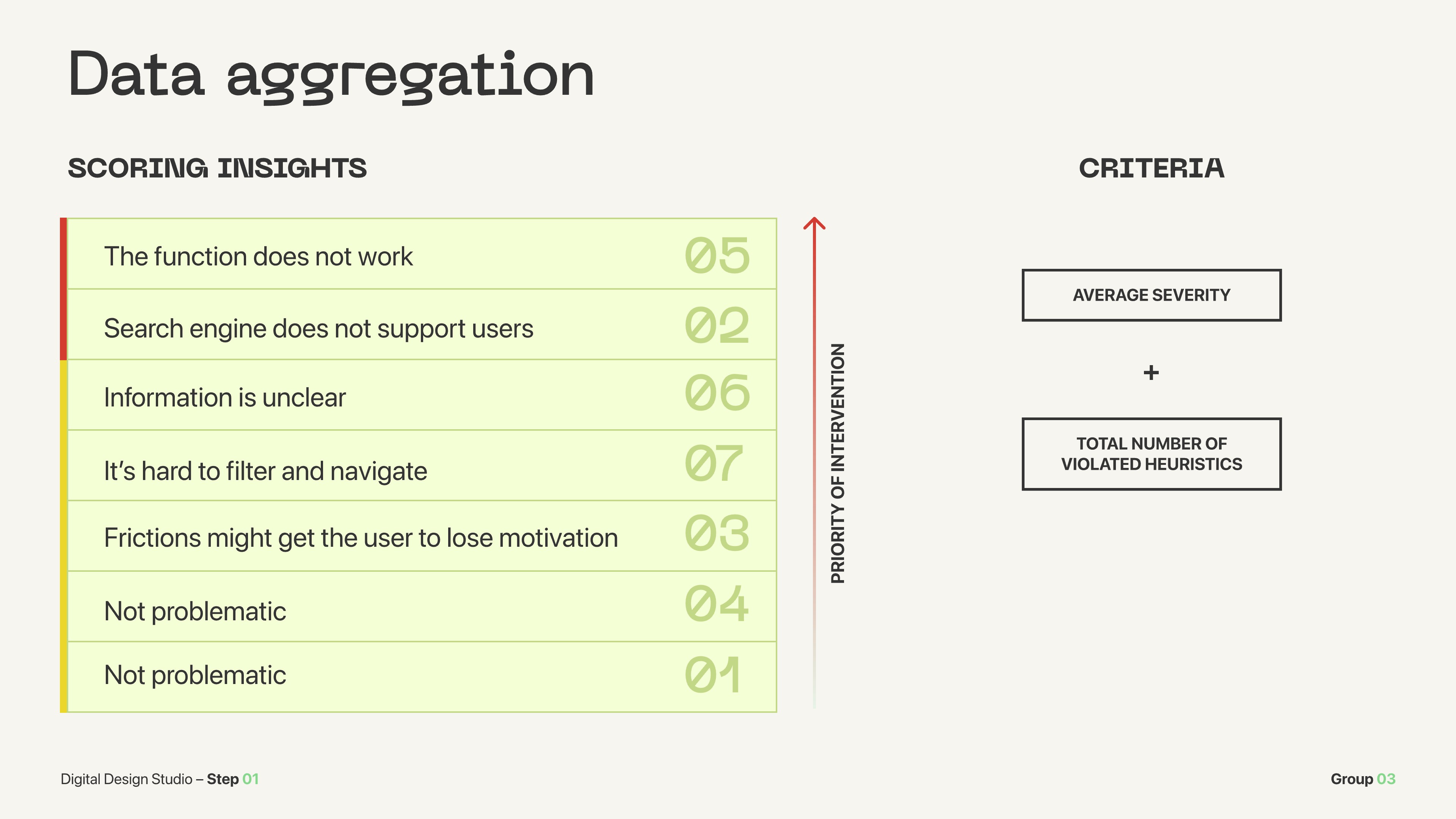
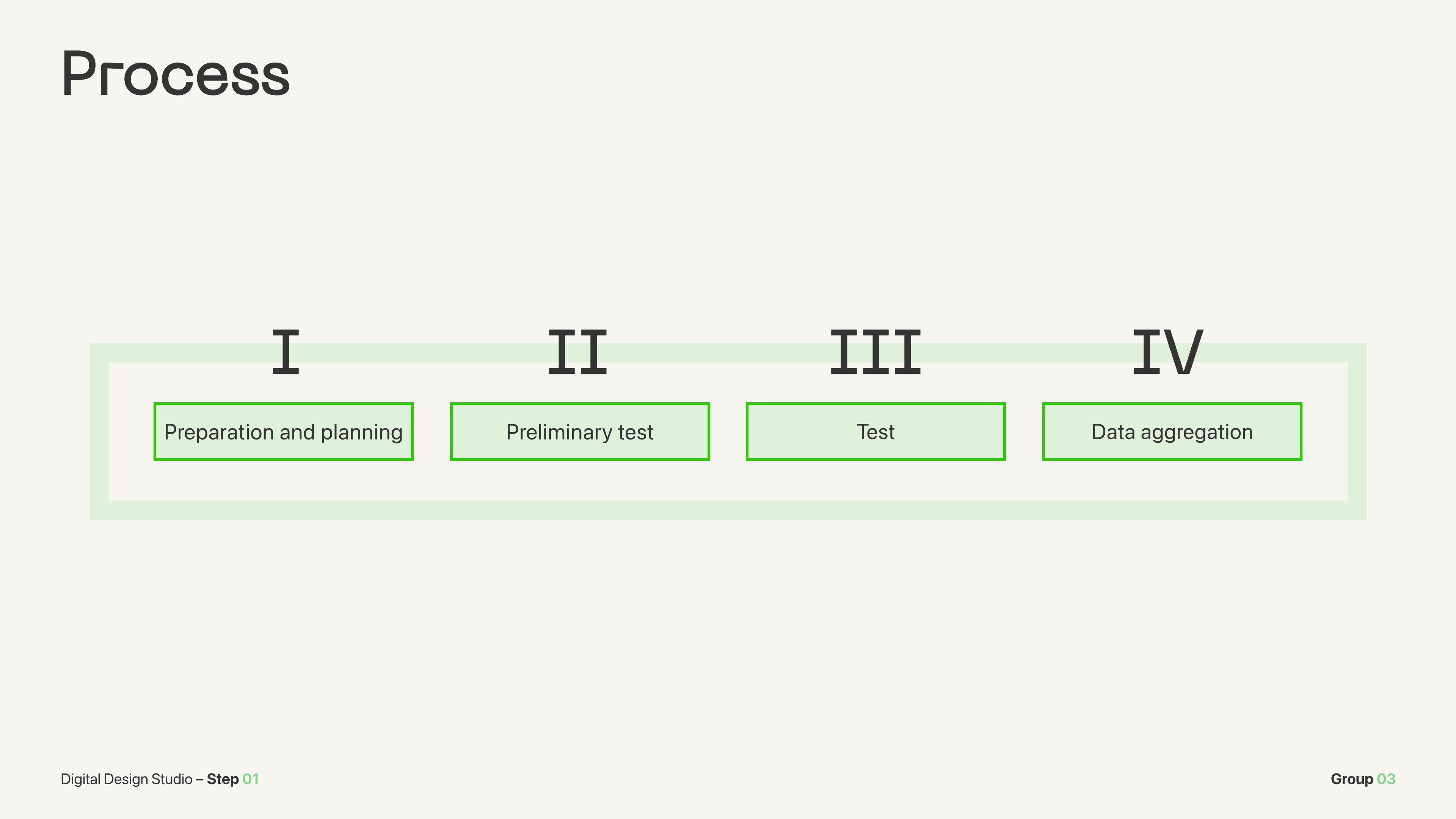
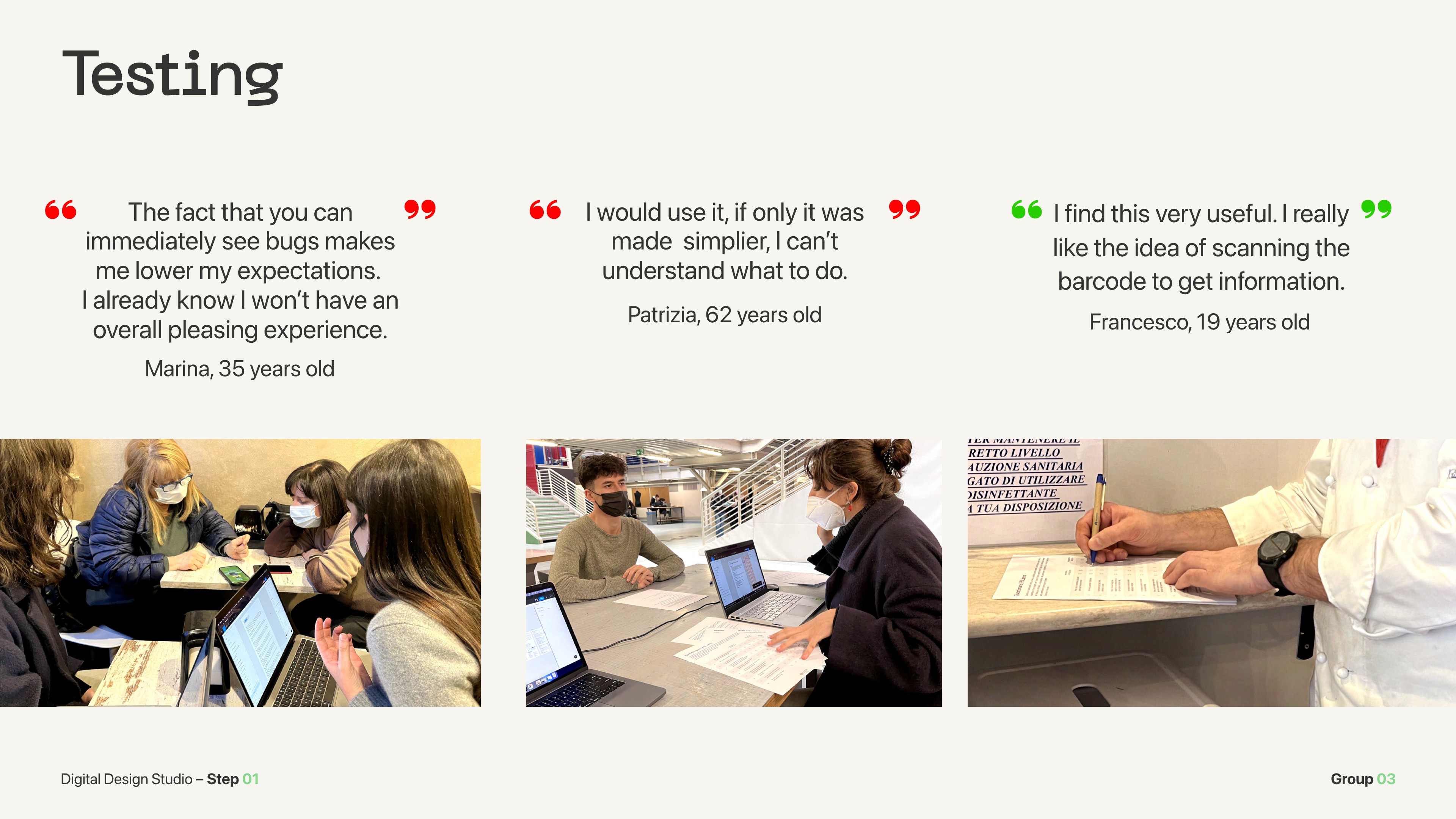
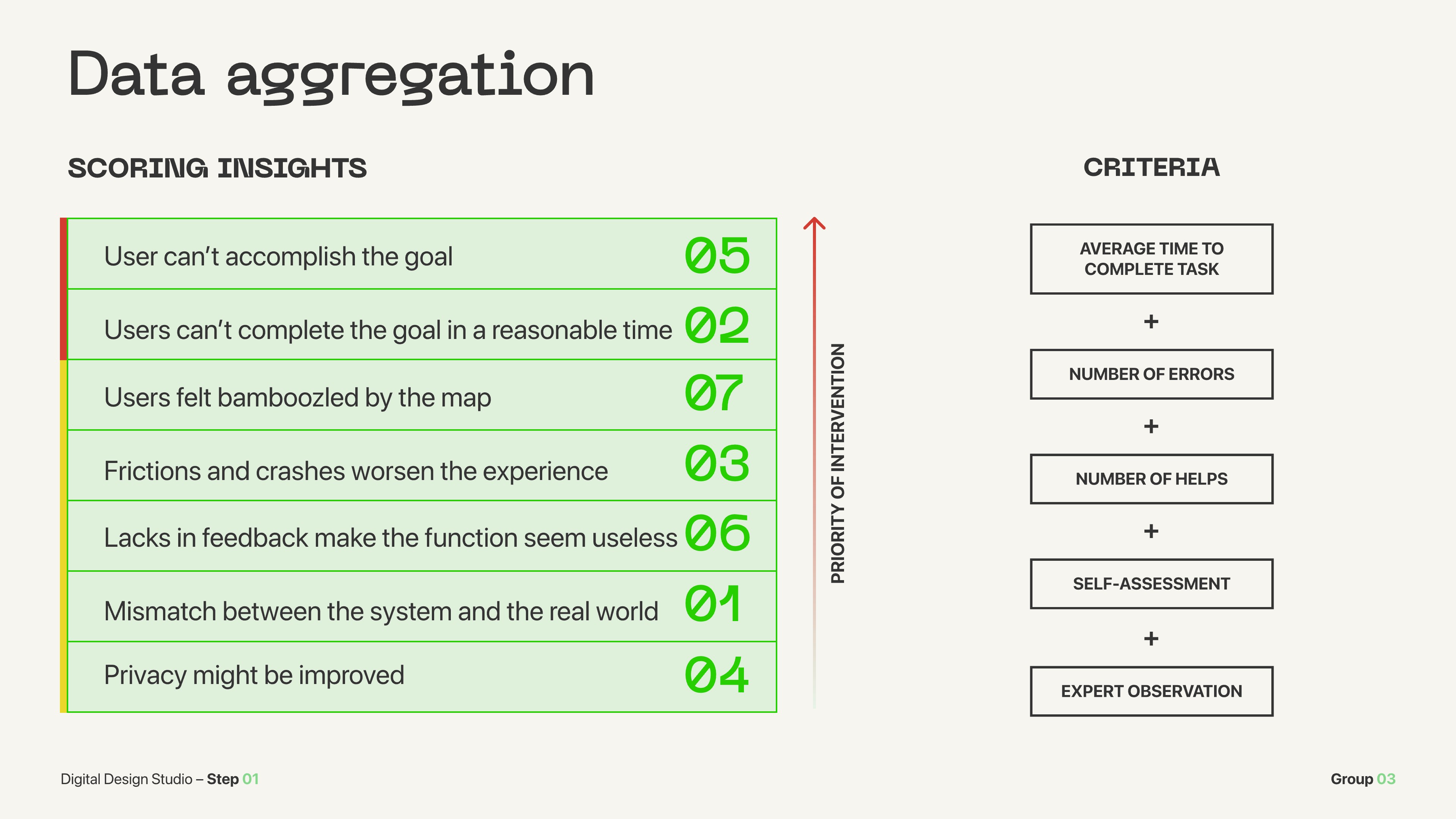
First step was to perform some pre-tests to further refine and improve the test. The official tests were then performed, and resulting data and insights were finally aggregated and analysed to identify problem areas and task-related issues.
The final product
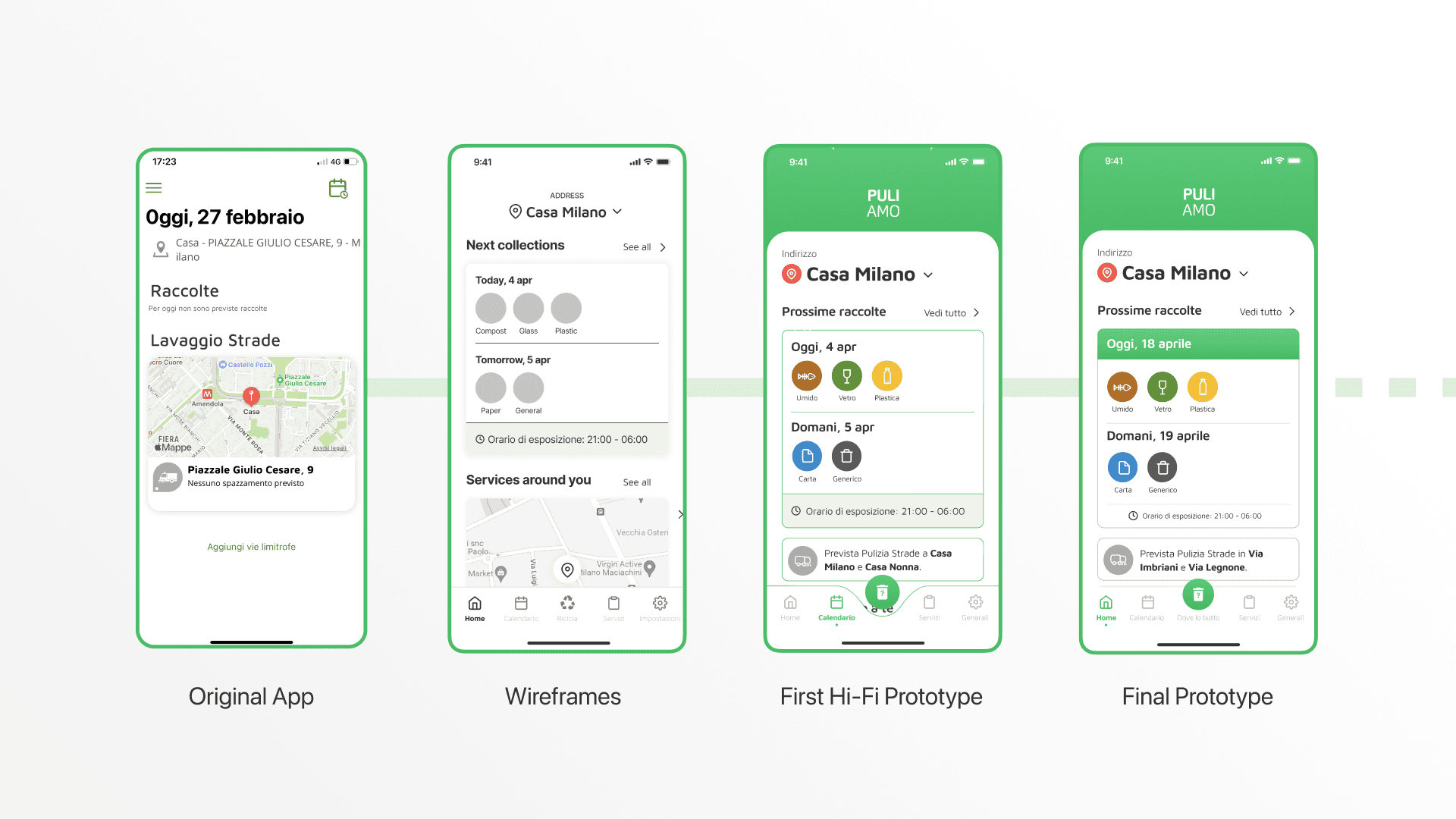
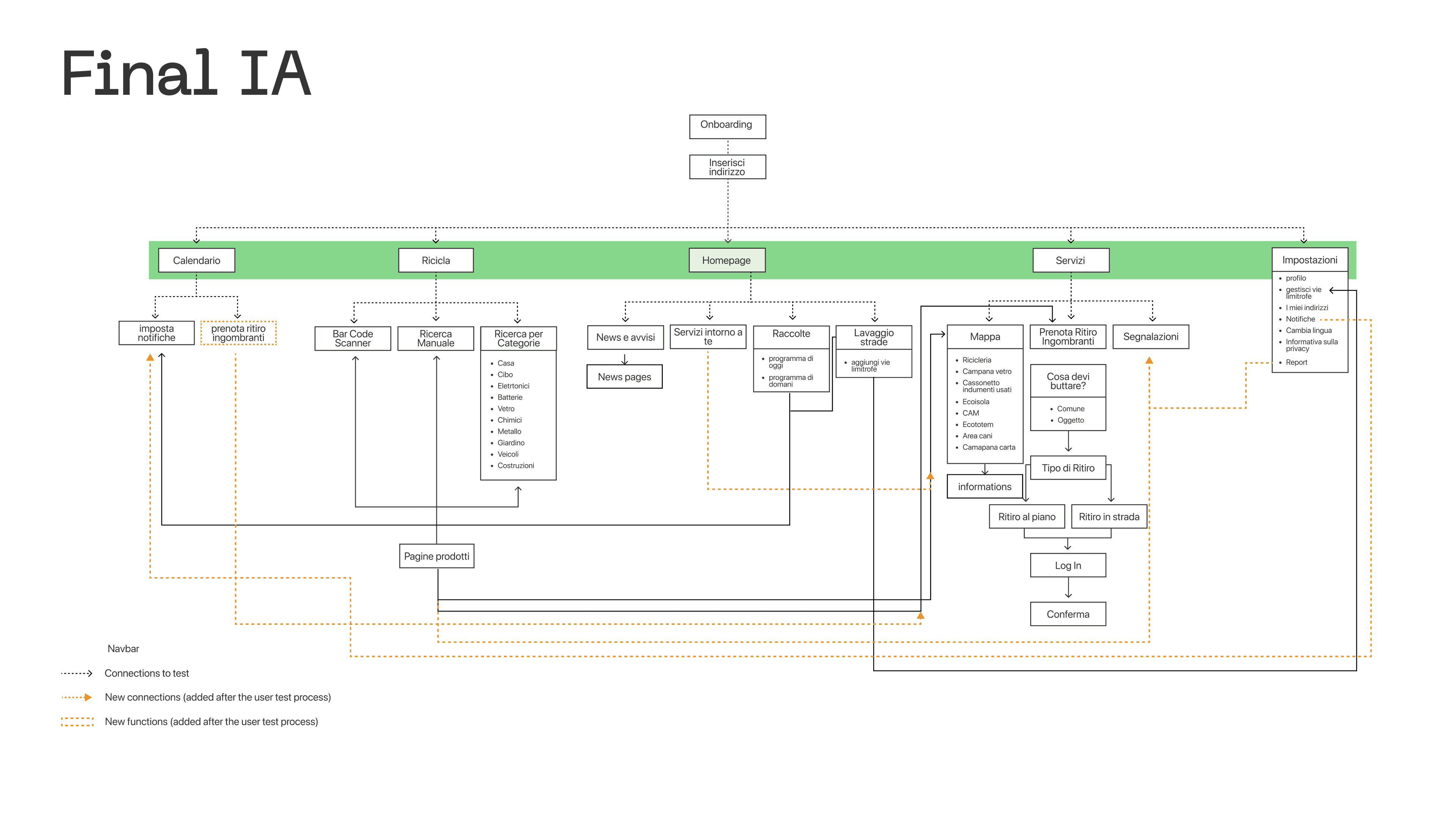
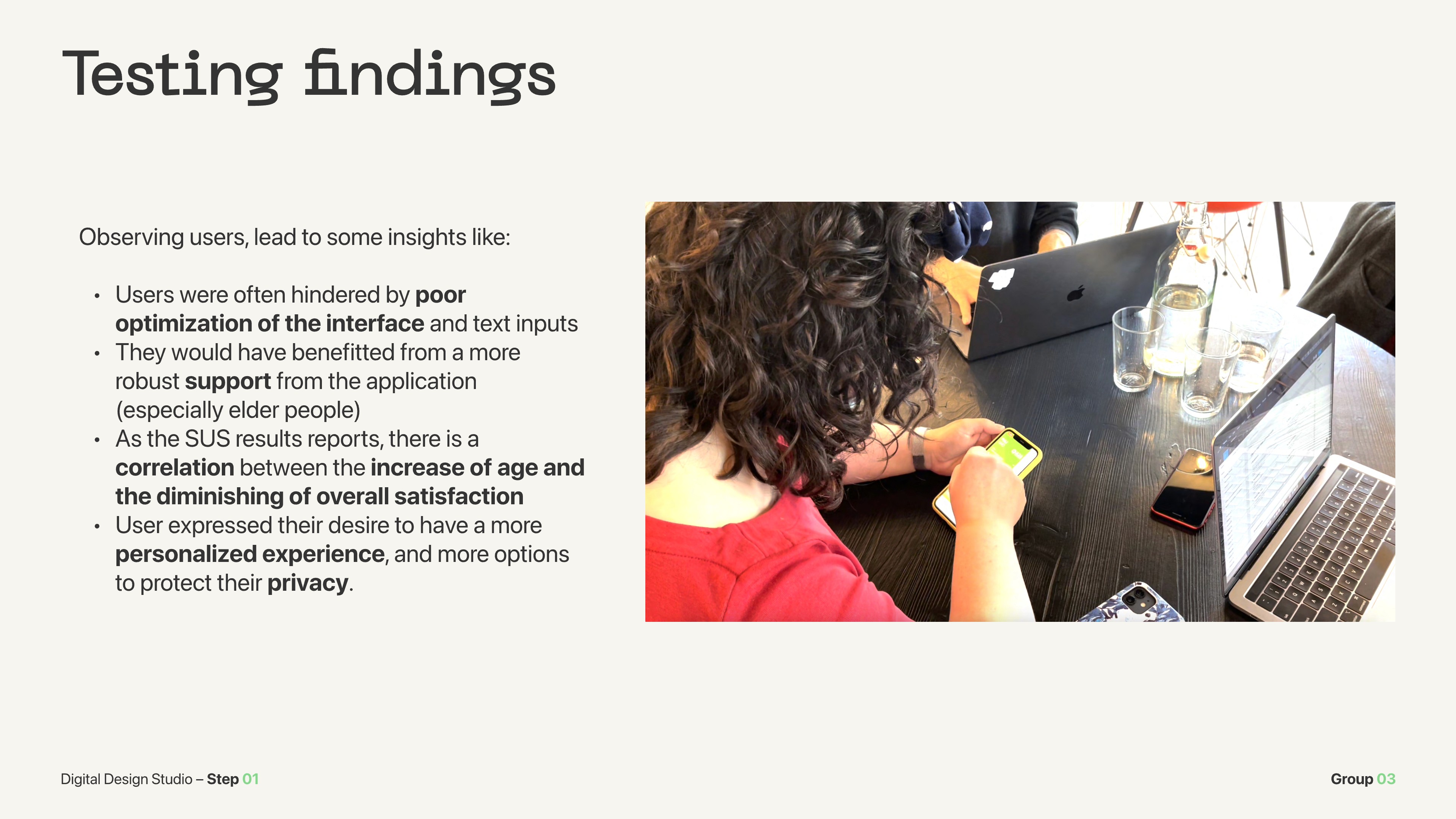
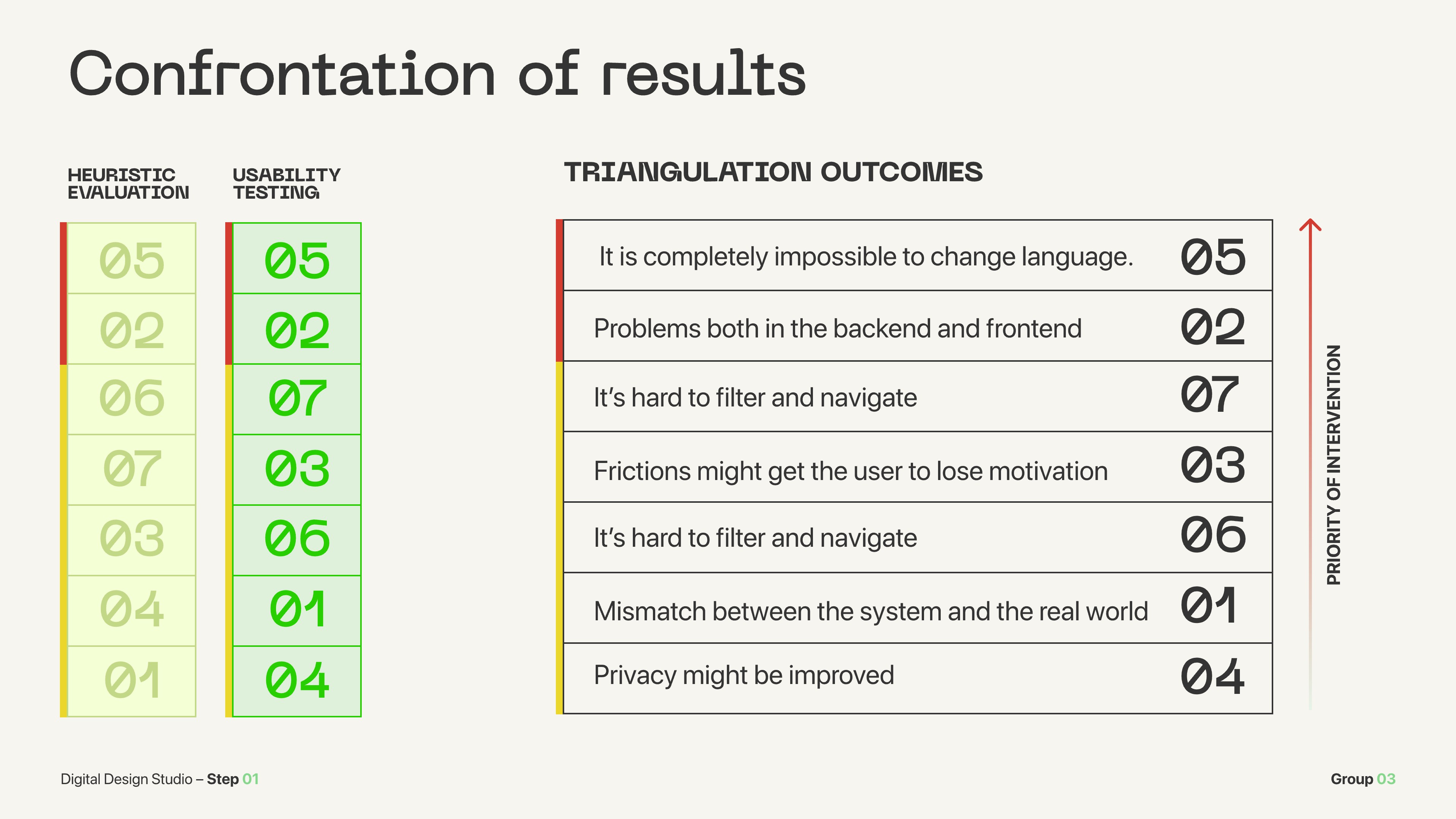
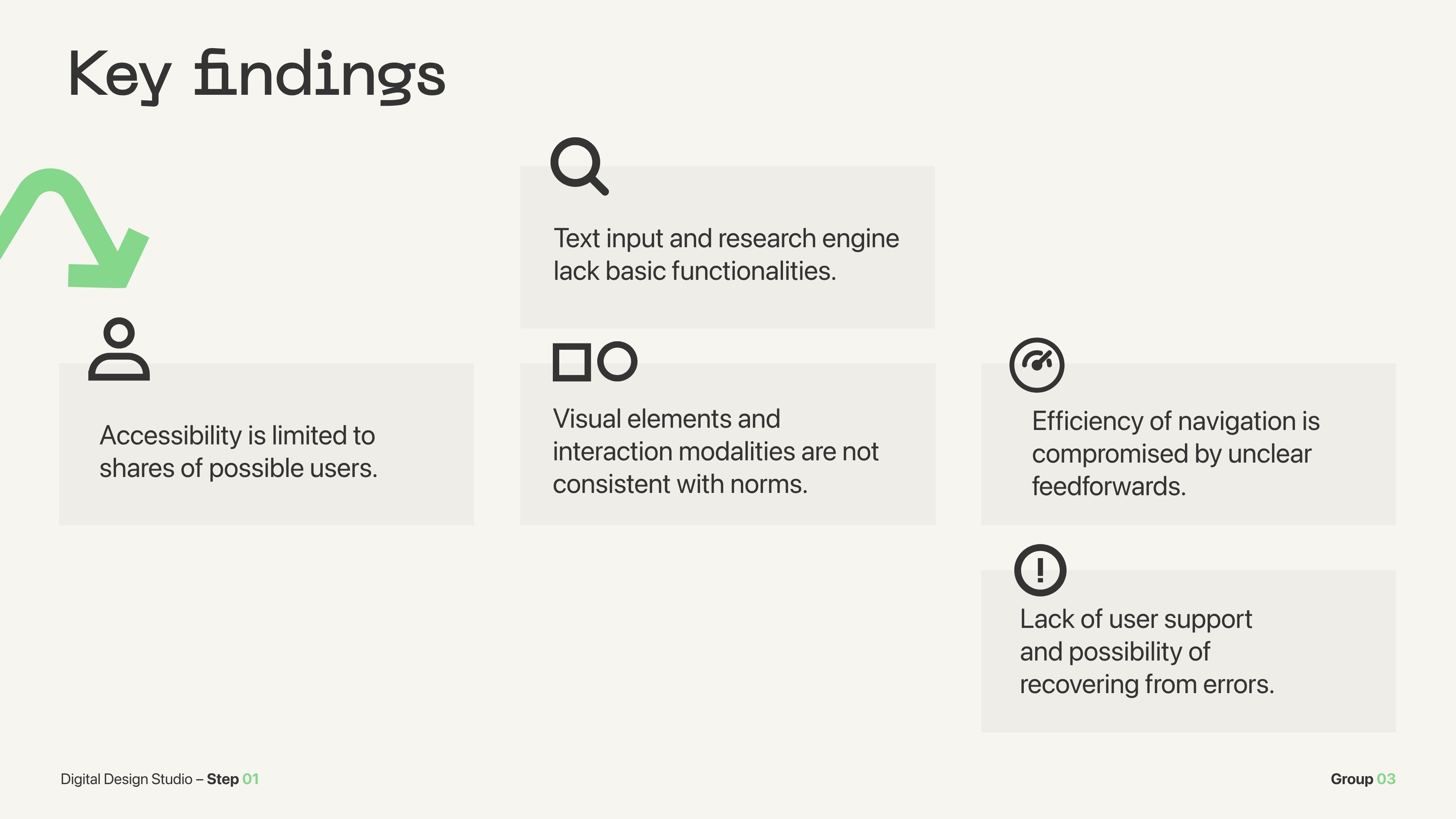
The analyses performed highlighted a series of key findings and design recommendations, which were the base for our proposed redesign:
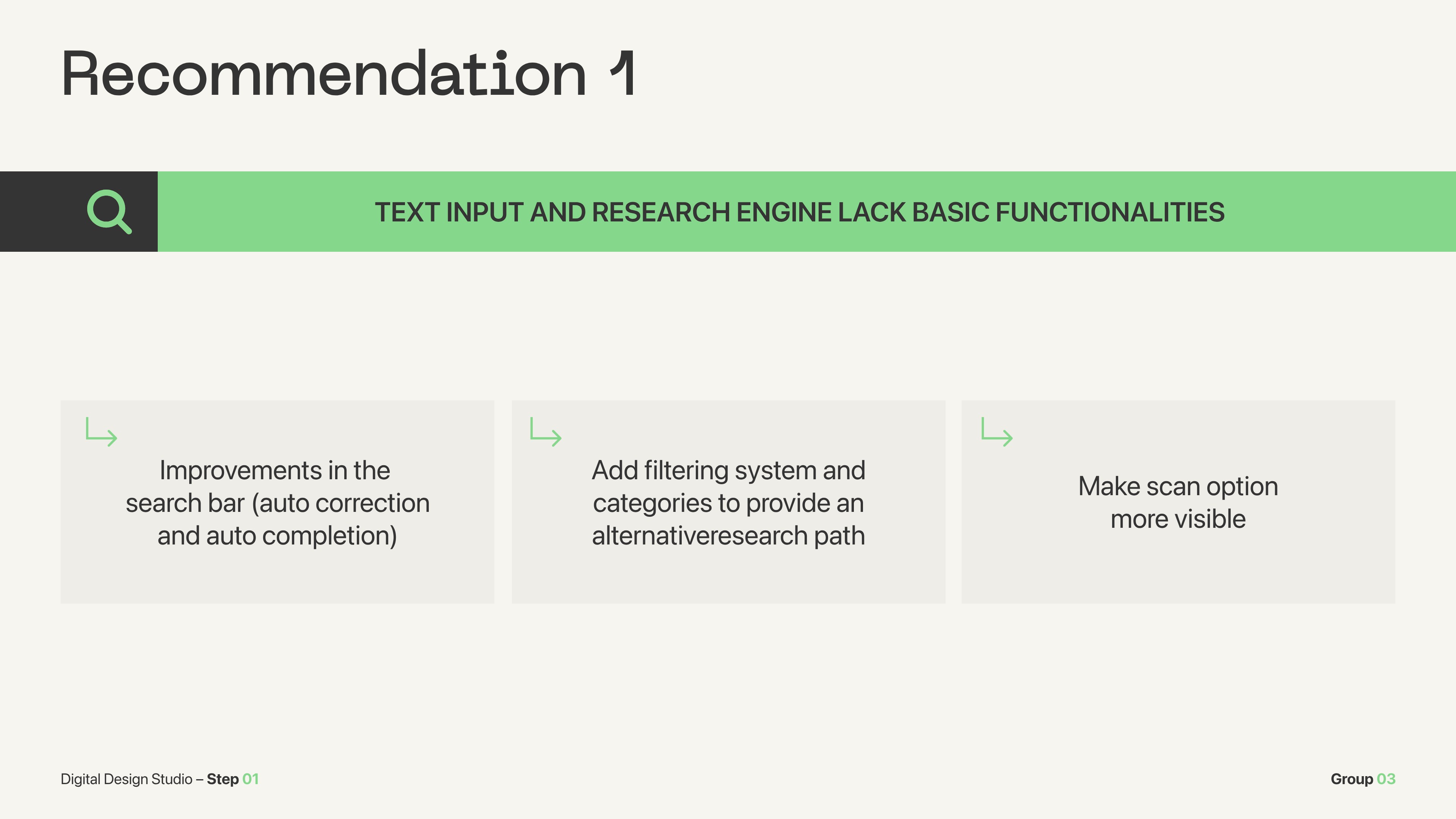
Text Inputs and research engine lack basic functionalities: Improvements are required in the search bar, such as auto correction and auto completion, adding a filtering system and categories to provide an alternative search path
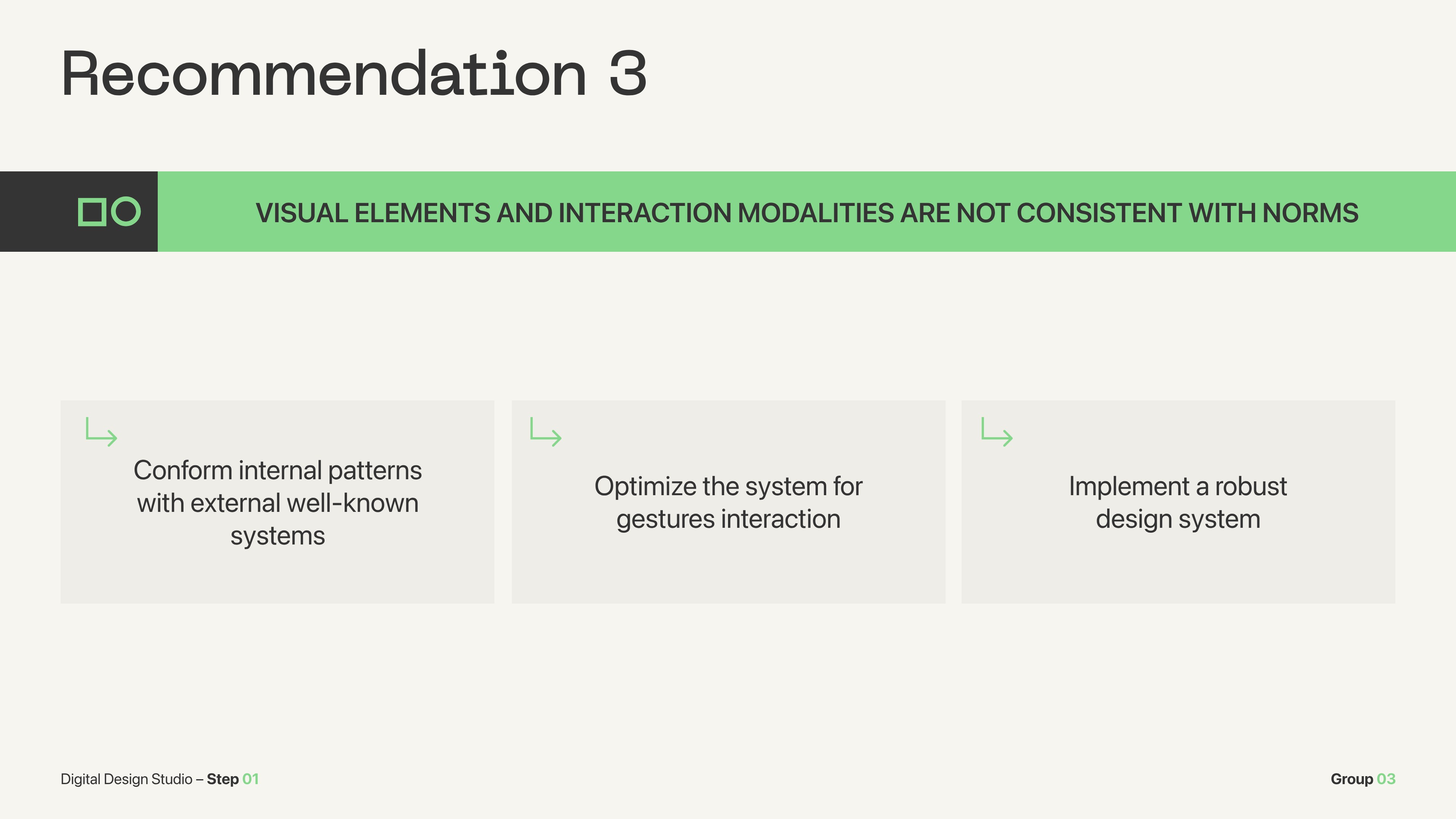
Visual elements and interaction modalities are not consistent with norms: Optimise the system for gestures interaction, implement a robust design system and conform internal patterns, to well-known ones
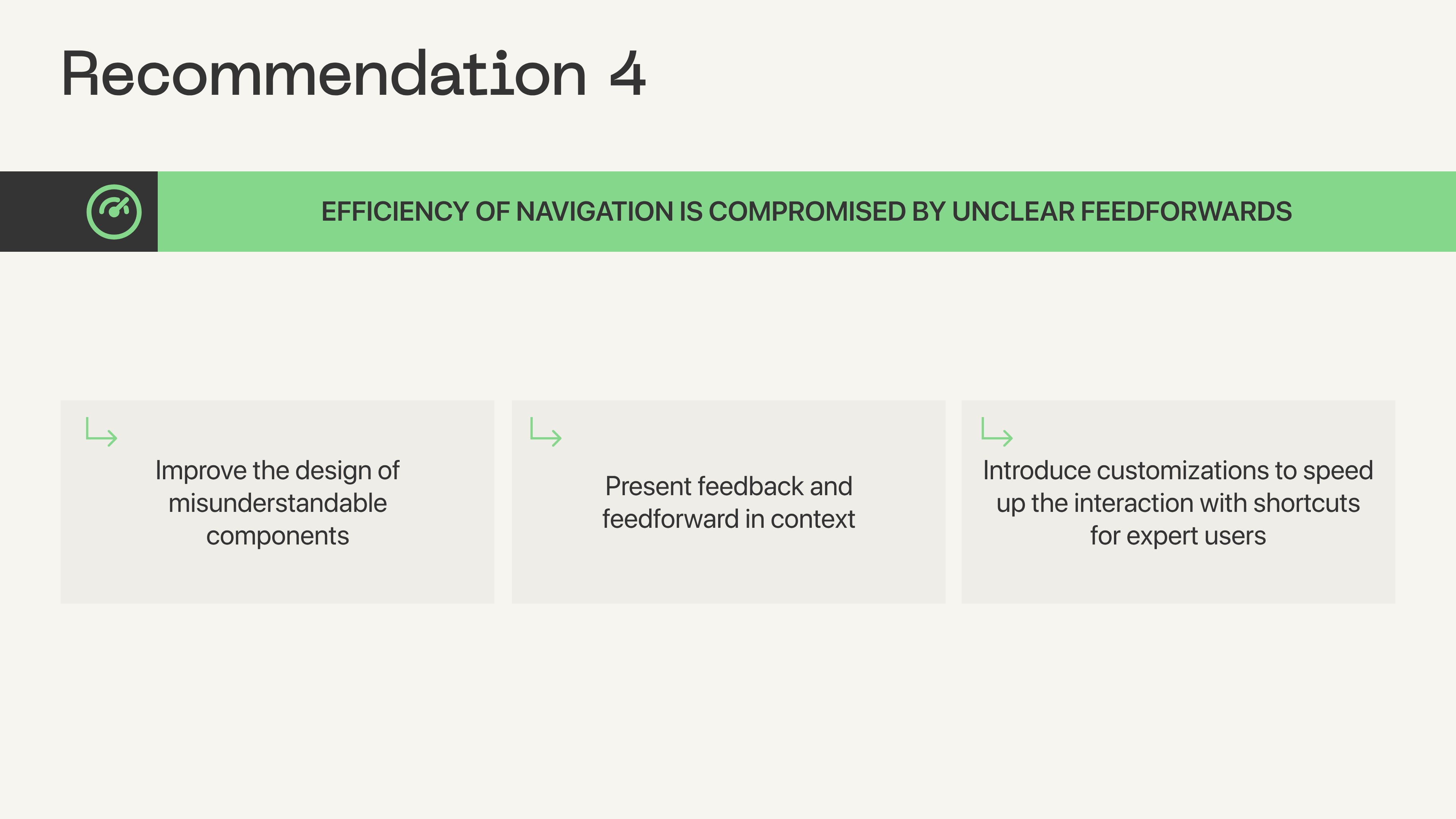
Efficiency of navigation is compromised by unclear feedforwards: improve the design of misunderstandable components, present feedback and feedforward in context, introduce customisazions to speed up the interaction with shortcuts for expert users
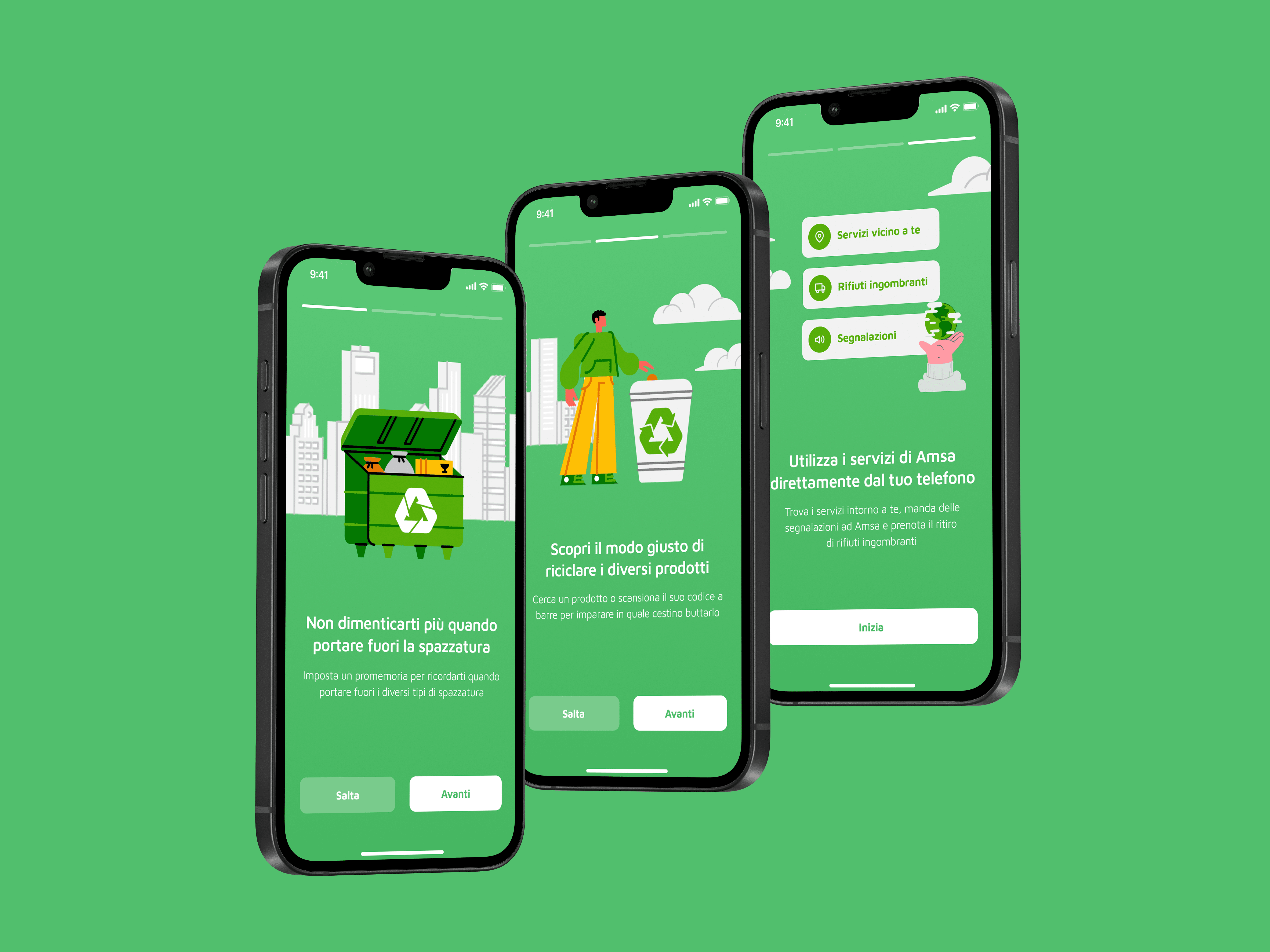
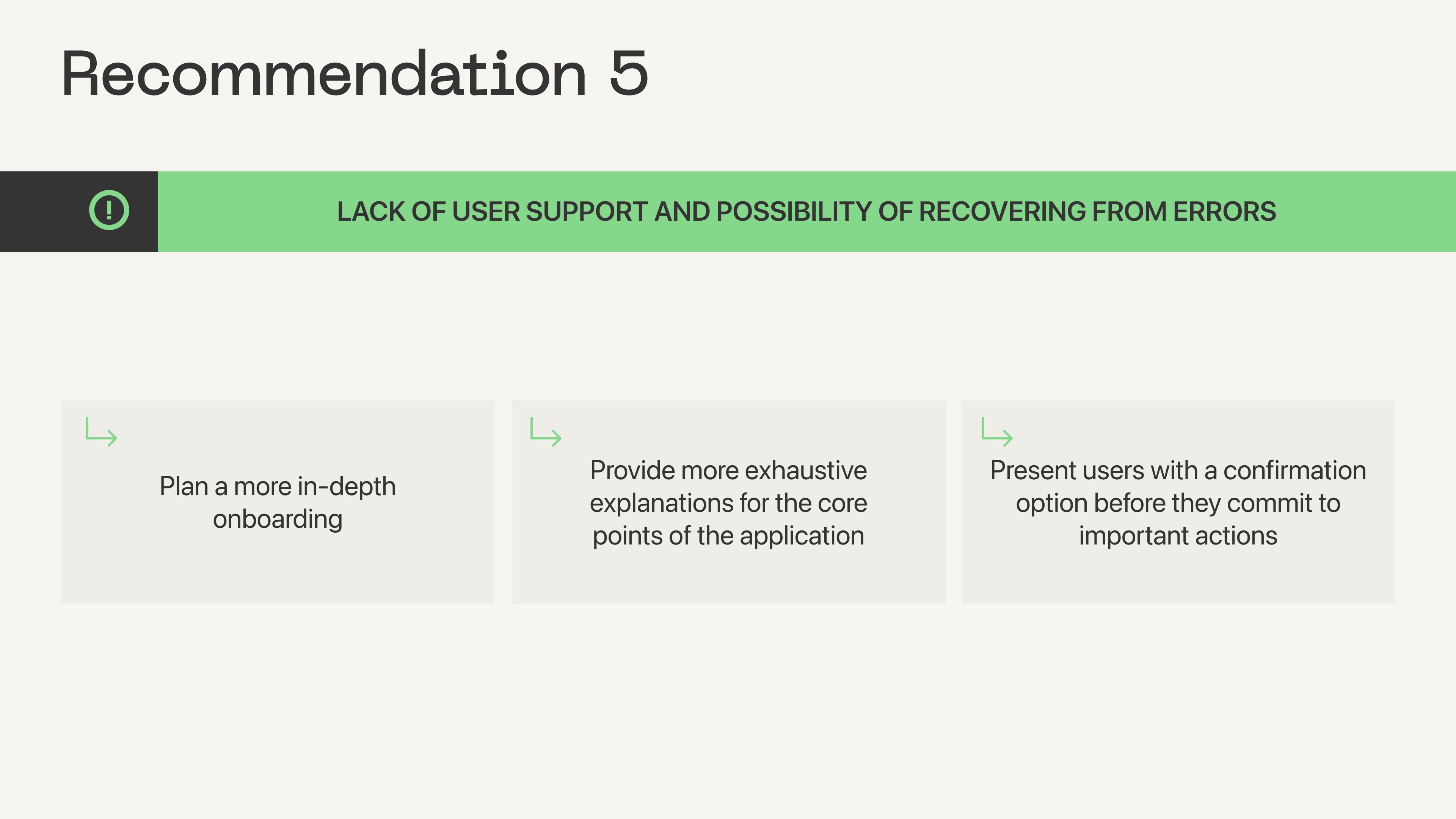
Lack of user support and possibility of recovering from errors: plan a more in-depth onboarding, provide more exhaustive explanations for the core points of the application, present users with a confirmation option before they commit to important actions
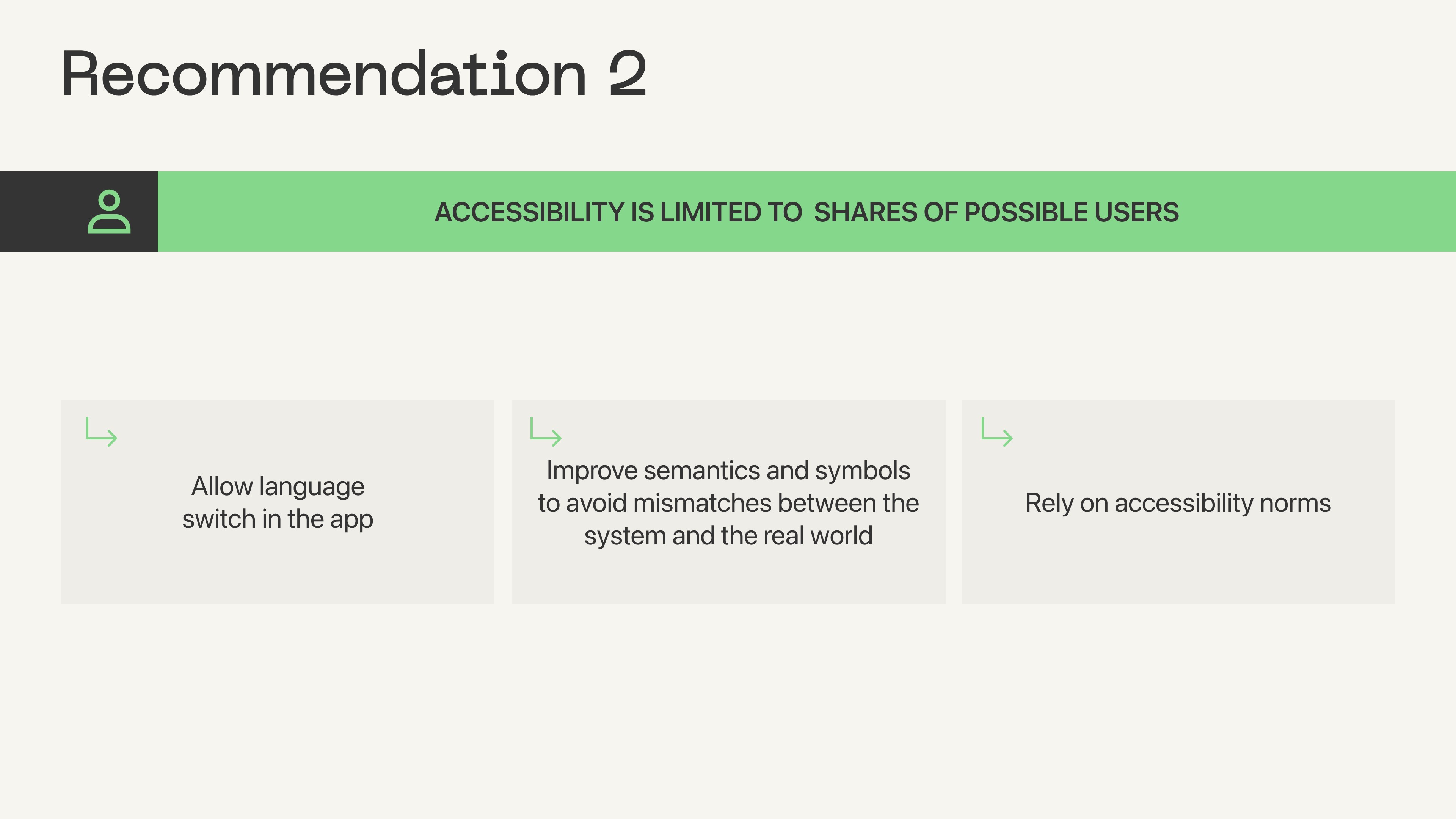
Accessibility is limited to shares of possible users: allow language switch in-app, improve semantics and symbols to avoid mismatches between the system and the real world, rely on accessibility norms